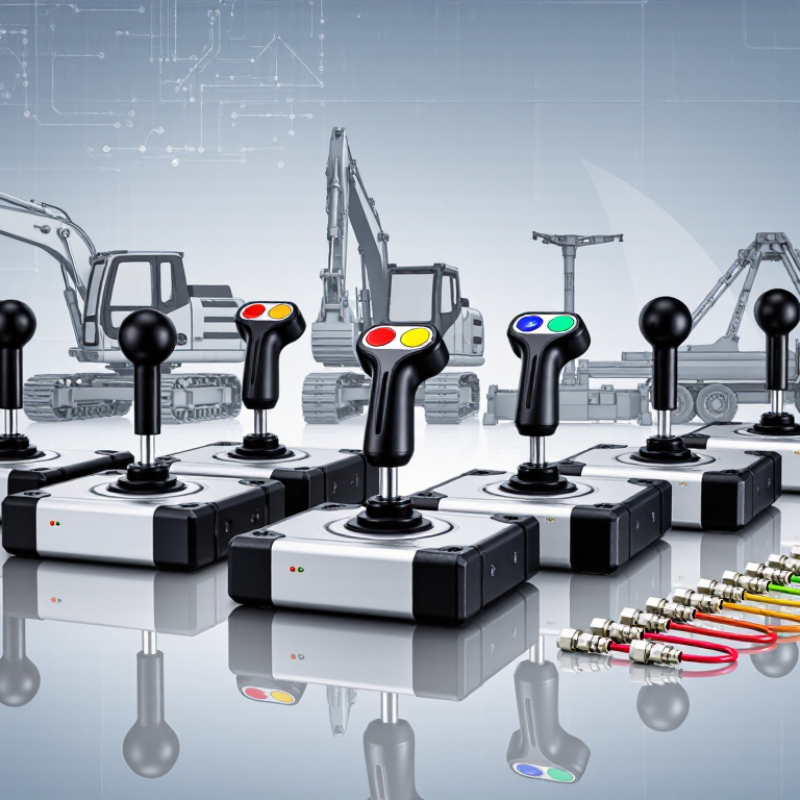
| Application and control fit | Confirm whether the joystick provides hydraulic pilot control, electrical output, or a specified combination. Check axis count, direction of operation, detents, return-to-neutral behavior, and operator interface requirements. | Model-specific datasheet, circuit diagram, interface drawing, and application questionnaire. | Compare the documented configuration with the machine’s hydraulic circuit and operator-control requirements. | 15% |
| Pressure and flow ratings | Check rated and maximum pressure, flow capacity, port arrangement, and any pressure or flow limits that apply to individual functions. | Technical datasheet showing operating limits, port details, and test conditions. | Verify that the ratings cover the machine’s specified operating conditions with appropriate engineering margin; do not rely on a product-family headline rating alone. | 15% |
| Control performance | Review metering behavior, controllability, neutral characteristics, hysteresis, response, and repeatability where these are relevant to the application. | Performance curves, test reports, and agreed acceptance criteria for the proposed model. | Compare results under stated test conditions and, when practical, evaluate a sample on the intended hydraulic circuit. | 12% |
| Mechanical and hydraulic compatibility | Check mounting dimensions, shaft or handle interface, port connection type, sealing arrangement, envelope, and available installation orientations. | Dimensioned drawings, port and thread specifications, and installation instructions. | Cross-check drawings against the machine layout and connection standards; confirm any adapters or custom interfaces in writing. | 10% |
| Materials and operating environment | Verify compatible hydraulic fluids, fluid-temperature limits, ambient-temperature limits, corrosion protection, and resistance to the expected dust, moisture, and vibration conditions. | Operating and storage limits, materials information, environmental test reports, and installation guidance. | Match every declared limit to the machine’s duty cycle and environment. Treat unlisted conditions as requiring written confirmation. | 10% |
| Durability and validation | Ask how the supplier validates cycle life, wear, leakage, vibration resistance, and performance stability for the offered configuration. | Model-specific validation summary, test methods, sample size where disclosed, and warranty terms. | Assess whether testing reflects the application and whether acceptance criteria and warranty exclusions are clearly stated. | 10% |
| Quality management and traceability | Review the supplier’s quality-management processes, production controls, change management, and ability to trace supplied parts or batches. | Current quality-system certificates, certificate scope and validity, inspection plan, and traceability statement. | Verify certificate status and scope with the issuing body where applicable; confirm that the relevant production site and product are covered. | 10% |
| Customization and engineering support | Evaluate support for configuration changes, prototypes, drawings, interface questions, troubleshooting, and design changes. | Written technical response, customization scope, engineering-change process, and sample-development plan. | Use a consistent technical inquiry and compare response completeness, clarity, and ownership of follow-up actions. | 8% |
| Documentation and compliance | Check availability of installation, operation, maintenance, safety, and compliance documentation for the intended market and application. | Current manuals, declarations or certificates applicable to the product, and a document revision list. | Confirm that documents match the offered model and destination market; verify regulatory claims rather than assuming they apply to every configuration. | 5% |
| Supply continuity and service | Assess quoted lead time, production capacity, spare-parts availability, repair options, and communication channels for technical or quality issues. | Written quotation, delivery assumptions, parts-support policy, and escalation contacts. | Compare commitments for the same order quantity and delivery terms; distinguish quoted estimates from contractual guarantees. | 3% |
| Total cost and commercial clarity | Consider unit price alongside tooling, customization, testing, freight, spare parts, and lifecycle support costs. | Itemized quotation, payment and delivery terms, warranty conditions, and any non-recurring charges. | Compare equivalent configurations and commercial terms; record assumptions and exclusions before making a selection. | 2% |