| Material definition | Invar is a group of low-expansion iron-nickel alloys. The most widely used grade is Invar 36, also known as Fe-Ni36. | The alloy is selected when dimensional stability is more important than high strength or low cost. |
| Typical chemical composition | Invar 36 generally contains approximately 36% nickel, with iron as the balance. Typical maximum limits include carbon about 0.02%, manganese about 0.50%, silicon about 0.25%, phosphorus about 0.025%, and sulfur about 0.025%; exact limits depend on the applicable specification. | A controlled chemistry is essential for achieving the required thermal-expansion performance and consistency between production lots. |
| Common designations | UNS K93600 and EN 1.3912 are commonly associated with Invar 36. Specifications may also identify the alloy as Fe-Ni36 or Ni36Fe. | Using the correct designation reduces the risk of receiving a similar-looking but unsuitable nickel-iron alloy. |
| Coefficient of thermal expansion | The average coefficient of thermal expansion is approximately 1.2 × 10⁻⁶/K over roughly 20–100°C, although the reported value varies with temperature, heat treatment, product form, and test method. | Low expansion helps maintain alignment, spacing, and dimensional accuracy during temperature changes. |
| Density | Approximately 8.05 g/cm³ at room temperature. | Invar is heavier than aluminum and many stainless steels, so weight should be considered in lightweight assemblies. |
| Magnetic behavior | Invar 36 is ferromagnetic below its Curie temperature, which is approximately 230°C, and its magnetic properties change as temperature approaches this point. | Magnetic response must be evaluated when the component is used near sensors, precision instruments, or magnetic fields. |
| Mechanical characteristics | Typical annealed Invar 36 has a tensile strength around 450–550 MPa and yield strength commonly around 240–350 MPa, depending on product condition and test requirements. | Mechanical values should be confirmed from the supplier’s mill certificate rather than assumed from the alloy name alone. |
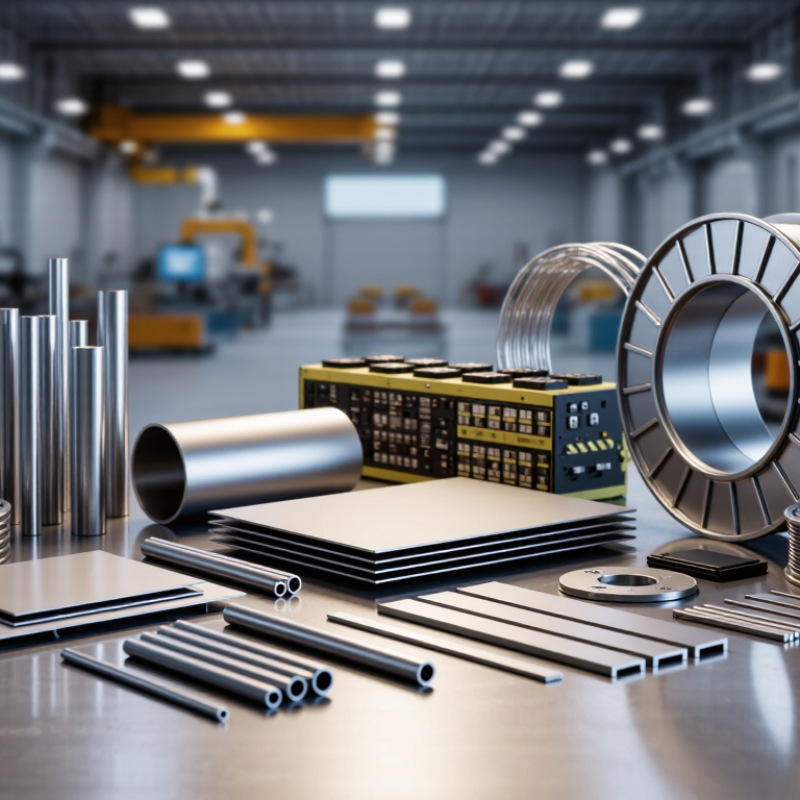
| Available product forms | Common forms include sheet, plate, strip, foil, bar, rod, wire, tube, precision-machined parts, and welded fabrications. | The required form affects minimum order quantity, lead time, machining allowance, and total production cost. |
| Typical thickness and size range | Commercial suppliers may offer foil below 0.10 mm, thin strip and sheet from approximately 0.10 mm upward, and plate or bar in larger custom dimensions. Actual availability varies by mill capability. | Buyers should provide thickness, width, length, flatness, tolerance, and quantity when requesting quotations. |
| Manufacturing and processing | Invar can be cut, formed, machined, drilled, welded, brazed, and surface finished. Its low thermal conductivity and work-hardening tendency require controlled cutting parameters and adequate cooling. | Processing conditions can influence distortion, residual stress, dimensional accuracy, and final thermal-expansion behavior. |
| Stress relief and stabilization | Stress-relief annealing, stabilization treatments, and controlled cooling may be specified after forming or rough machining to reduce dimensional movement. | Precision parts may require a defined heat-treatment sequence before final machining and inspection. |
| Welding considerations | Invar is weldable using suitable processes such as TIG, laser, or resistance welding. Heat input, joint design, filler selection, and post-weld stress relief require engineering control. | Improper welding can cause local distortion and dimensional changes that are significant in precision assemblies. |
| Common applications | Typical applications include optical benches, precision instrument frames, cryogenic equipment, electronic package components, measuring equipment, aerospace tooling, glass-sealing components, and temperature-stable structures. | The material is useful where thermal movement could impair calibration, optical alignment, sealing, or component positioning. |
| Corrosion resistance | Invar provides moderate atmospheric corrosion resistance but is not generally selected as a substitute for highly corrosion-resistant stainless or nickel alloys. | Surface protection or a different alloy may be required for marine, chemical, or high-humidity service. |
| Relevant quality documents | A professional supplier should be able to provide chemical analysis, mechanical test results when specified, dimensional inspection data, surface-condition details, heat-treatment records, and a material certificate traceable to the production lot. | Documentation supports incoming inspection, regulatory compliance, and traceability for critical components. |
| Supplier capability categories | China-based supply channels commonly include integrated alloy mills, precision strip and foil producers, metal service centers, custom machining workshops, and fabricated-component suppliers. | The best supplier type depends on whether the requirement is raw material, narrow-tolerance strip, near-net-shape parts, or a finished assembly. |
| Key quotation requirements | Specify grade, standard or designation, product form, dimensions, tolerances, surface finish, condition, heat treatment, quantity, inspection requirements, packaging, and destination. | Clear technical requirements make quotations comparable and help prevent substitutions or unexpected surcharges. |
| Main purchasing risks | Common risks include incorrect nickel content, inconsistent thermal-expansion results, excessive residual stress, poor flatness, inadequate traceability, and insufficient control of weld or machining distortion. | Pre-production samples, approved drawings, third-party testing, and lot-by-lot certificates can reduce technical and delivery risk. |