Top 10 Manufacturing Solutions for Increased Efficiency and Productivity?
In today's fast-paced manufacturing landscape, efficiency is crucial for success. Industry expert James Carter, CEO of Innovative Manufacturing Solutions, emphasizes, "The right solutions can transform efficiency into a competitive advantage." As businesses strive to boost productivity, selecting appropriate manufacturing solutions becomes essential.
Manufacturers face many challenges, including rising costs and evolving technology. This environment requires adaptability and forward-thinking. Effective manufacturing solutions can streamline processes, reduce waste, and improve output quality. They can also enhance workforce engagement, which is vital to sustainable growth.
Investing in the right technologies isn't without its complexities. Many manufacturers struggle with integration and implementation. They must ensure their choices align with long-term goals. Embracing advanced manufacturing solutions can be exciting but may lead to uncertainty. It’s a balancing act that requires careful analysis and feedback. As the industry evolves, keeping pace with innovation will remain a critical consideration for manufacturers aiming for lasting efficiency.
Innovative Technologies for Enhancing Manufacturing Processes
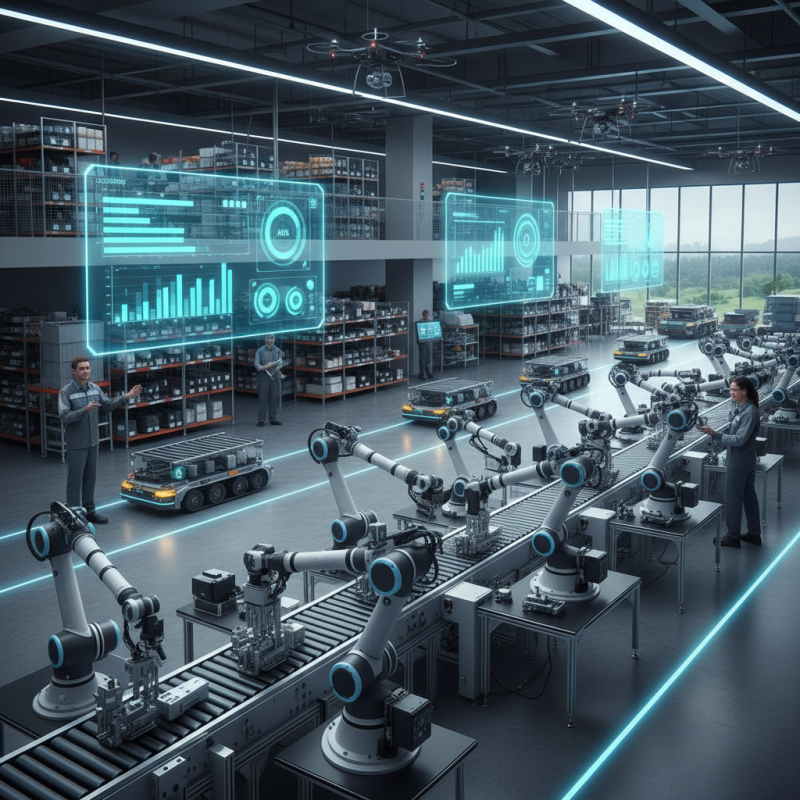
In today's manufacturing landscape, innovative technologies play a crucial role in enhancing efficiency and productivity. Automation is transforming traditional workflows. By integrating robotic systems, manufacturers can reduce human error. This technology allows for precise operations at higher speeds. The result is a streamlined production line that shifts focus from mundane tasks to more strategic responsibilities.
Artificial intelligence (AI) is another game-changer. AI systems analyze data from the production floor in real-time. This capability helps identify bottlenecks quickly. Predictive maintenance powered by AI can prevent equipment breakdowns. However, the implementation of such technologies can be challenging. Workforce training is essential, yet often overlooked. A skilled workforce can maximize the benefits of these advanced technologies.
Additionally, the Internet of Things (IoT) connects machinery and devices. This interconnectivity enhances monitoring and control. Yet, security concerns arise as systems become more integrated. Companies must address these vulnerabilities before fully committing to IoT solutions. An investment in cybersecurity is critical to protect sensitive data. Balancing innovation with security measures is vital for sustainable growth in manufacturing processes.
Top 10 Manufacturing Solutions for Increased Efficiency and Productivity
Lean Manufacturing Principles for Optimal Efficiency
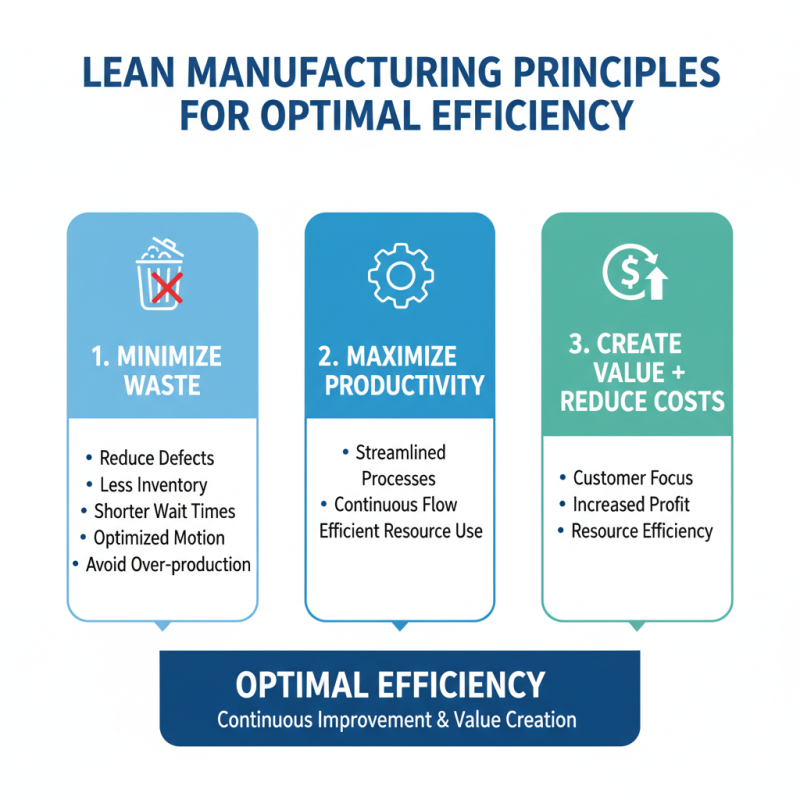
Lean manufacturing focuses on minimizing waste while maximizing productivity. This concept emphasizes efficiency and streamlining processes. By adopting lean principles, companies can create value and reduce costs simultaneously.
One key principle is the value stream mapping. This technique helps visualize the flow of materials and information. It identifies bottlenecks and areas needing improvement. Many businesses overlook this step, resulting in ongoing inefficiencies.
Another important aspect is continuous improvement, or Kaizen. This involves small, incremental changes that lead to significant improvements over time. However, not all changes will yield positive results. Some may require reflection and adjustment. Embracing this iterative process fosters a culture of innovation. Identifying failures helps refine practices, leading to better outcomes.
Automation and Robotics in Modern Manufacturing Solutions
Automation and robotics are revolutionizing the manufacturing sector. According to a report by McKinsey, automation could increase productivity by up to 30% by 2030. Factories are adopting automated solutions to optimize production lines and reduce labor costs. Robots now handle repetitive tasks with precision. This reduces human error and improves output quality.
However, implementing these technologies isn't without challenges. Many companies face high upfront costs and require skilled workers to manage complex systems. A survey by Deloitte revealed that 58% of manufacturers struggle with workforce adaptation to automation. Despite these hurdles, the long-term benefits are significant. Robotics can work continuously, increasing overall machine utilization rates.
Data from the World Economic Forum suggests that 85 million jobs may be displaced by 2025 due to automation. Companies must balance efficiency gains with workforce impacts. Investing in employee retraining programs can mitigate these risks. Automation enhances productivity, but it is crucial to navigate its ethical and social implications carefully.
Data Analytics and IoT for Productivity Improvement
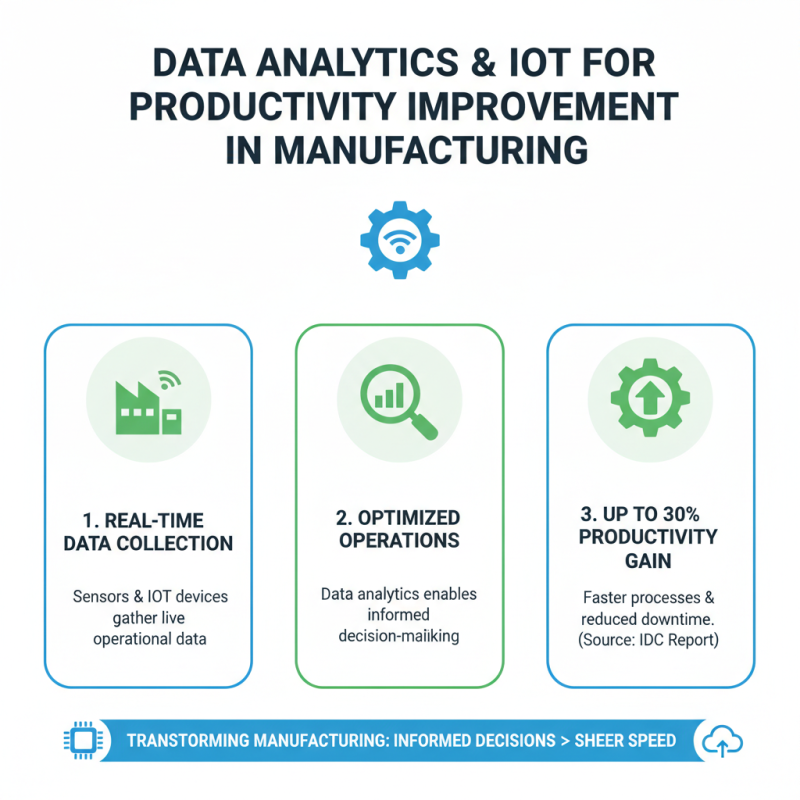
Data analytics and IoT are transforming the manufacturing sector. Factories can now collect real-time data, enabling them to optimize operations. According to a report by the International Data Corporation, manufacturers that utilize IoT technologies can achieve up to a 30% increase in productivity. This shift is not just about speed; it's about informed decision-making.
Advanced analytics allow companies to monitor equipment health and predict failures. A study from McKinsey found that predictive maintenance can reduce downtime by 20-50%. However, implementing these solutions requires a strategy. Many companies struggle with data integration and analysis. They often have disparate systems that do not communicate effectively. This can lead to missed opportunities for improvement.
While embracing IoT and data analytics offers significant benefits, challenges remain. Companies must train their workforce to leverage these technologies. Additionally, data security is a growing concern. Cyber threats can undermine gains made through increased efficiency. Organizations need to invest in robust cybersecurity measures. Balancing innovation with security is crucial for sustainable growth in manufacturing.
Sustainable Practices in Manufacturing to Boost Efficiency
Sustainable practices are crucial for modern manufacturing. They not only enhance efficiency but also significantly reduce operational costs. According to a report by the World Economic Forum, companies focusing on sustainability can lower energy costs by up to 30%. Such practices include minimizing waste, optimizing resource use, and adopting renewable energy sources.
Implementing energy-efficient technologies can significantly reduce carbon footprints. A recent study indicated that factories that switched to LED lighting saw a 50% decrease in energy consumption. Regular audits can help identify areas for improvement. This proactive approach is essential for long-term sustainability.
**Tip:** Engage employees in sustainability initiatives. Training them fosters a culture of environmental responsibility.
Improving supply chain transparency can also boost efficiency. Companies that track their suppliers’ sustainability score report a 25% improvement in operational efficiency. However, many businesses struggle with data collection and analysis. Investing in technology can streamline this process.
**Tip:** Use software tools that provide real-time insights into manufacturing processes. They can help identify inefficiencies promptly.
Emphasizing sustainable practices is an ongoing journey, not a destination. Companies must continually assess their methods and adapt to new findings. Balancing efficiency with sustainability is vital for success in today’s competitive landscape.
Top 10 Manufacturing Solutions for Increased Efficiency and Productivity
| Solution |
Description |
Efficiency Boost (%) |
Sustainability Impact |
| Lean Manufacturing |
Minimizes waste while maximizing productivity. |
30% |
Significant reduction in resource use. |
| Automation |
Integrates machines to perform tasks automatically. |
40% |
Lower energy consumption and waste. |
| IoT Integration |
Connects devices to gather data for analysis. |
25% |
Improves recycling rates. |
| Just-in-Time Production |
Produces goods as needed to reduce inventory costs. |
20% |
Reduces excess material waste. |
| Total Quality Management |
Focuses on long-term success through customer satisfaction. |
15% |
Improves sustainability practices. |
| Advanced Planning Systems |
Optimizes production schedules and resource use. |
35% |
Minimizes waste through better resource allocation. |
| Predictive Maintenance |
Uses data to predict equipment failures before they occur. |
28% |
Increases machine life and reduces waste. |
| Vertical Integration |
Controls the entire supply chain to reduce dependencies. |
22% |
Improves resource efficiency. |
| Agile Manufacturing |
Responds quickly to market changes and customer demands. |
30% |
Reduces waste by adapting to needs. |
| Sustainable Sourcing |
Obtains materials in an environmentally responsible manner. |
18% |
Supports sustainable practices in the supply chain. |