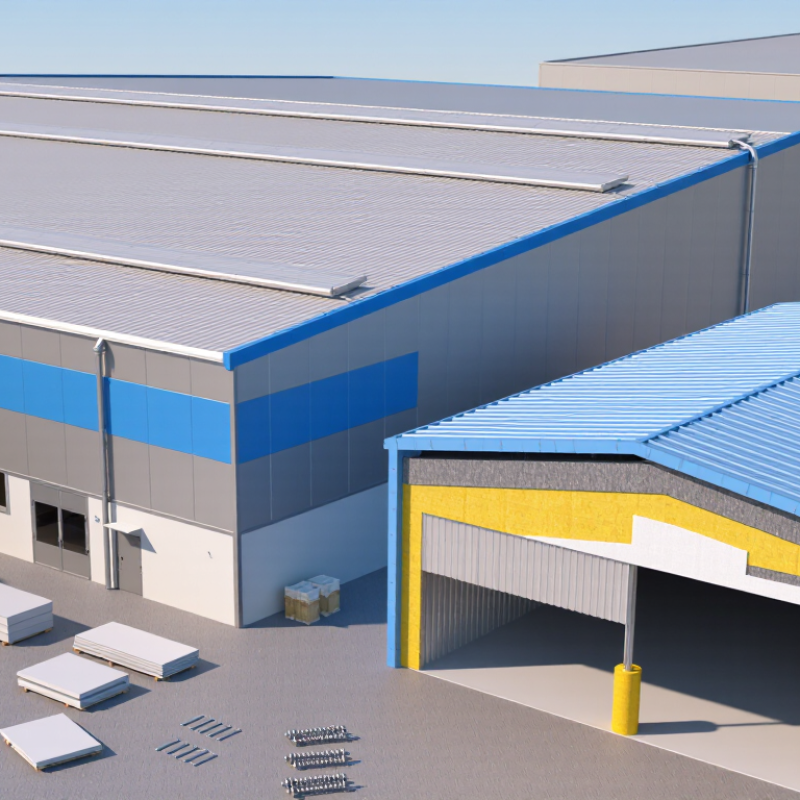
Choosing a Roof Panel Type for Different Building Needs
Choosing a metal sandwich roof starts with the building’s main constraint: heat loss, fire performance, noise, or installation speed. PIR-core panels can provide substantial insulation within a relatively thin assembly, which can help where roof height is limited. Mineral-wool-core panels are often considered where fire resistance and sound control matter more. Actual performance depends on the full assembly, not just the core.
Profile and joint design matter too. Deep-rib panels can suit long roof spans, while concealed-fix systems reduce exposed fasteners and potential leak paths. But neither choice removes the need to check slope, drainage, wind loads, and connection details.
The U.S. Department of Energy’s Energy Saver guidance reports that reflective roofs can be up to 50°F cooler at the surface than conventional roofs in hot, sunny conditions. That is useful context, not a guaranteed indoor temperature reduction.
For a refrigerated warehouse, continuous insulation and careful joint sealing may outweigh appearance. A workshop may place more value on impact resistance and straightforward repairs. Coastal or high-wind sites need tested attachment details matched to local conditions.
One detail is easy to overlook: thermal performance can suffer at penetrations and poorly sealed edges. There is no universal best panel. The right choice can still be wrong if installation quality is weak.