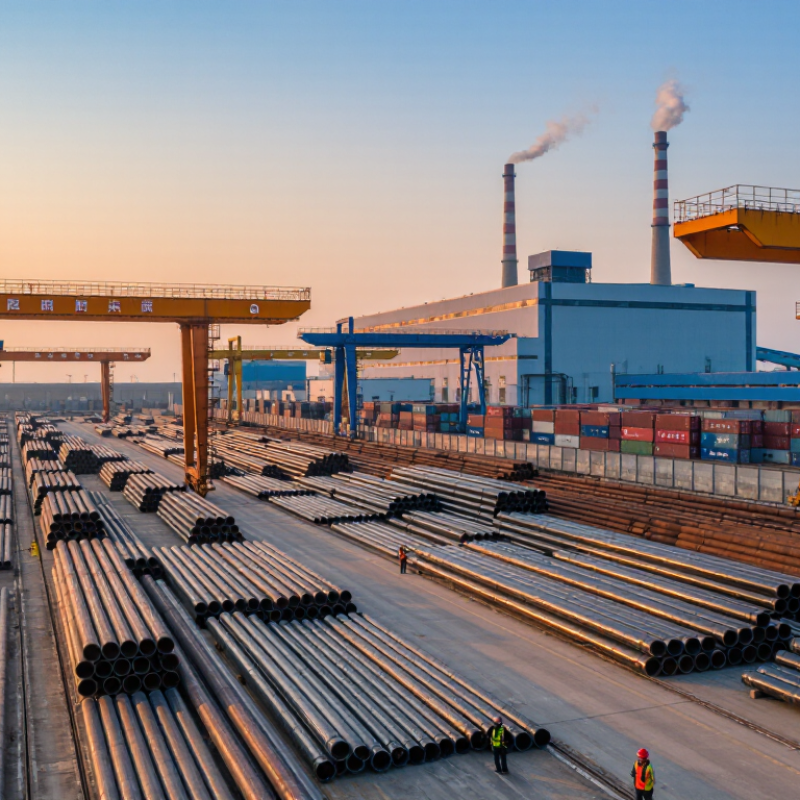
| Definition | Mild steel pipe is generally low-carbon steel pipe, commonly containing approximately 0.05%–0.25% carbon. The exact chemical limits depend on the applicable standard and grade. | Low carbon content normally provides good weldability, formability, and cost efficiency. | Water lines, structural work, mechanical fabrication, general industrial piping, and construction. | Confirm the applicable product standard, chemical composition, manufacturing process, and inspection documents. |
| Typical Manufacturing Processes | Common processes include electric-resistance welded (ERW), longitudinally welded, spiral-welded, and seamless production. | The process affects available sizes, dimensional tolerances, pressure capability, surface condition, and price. | ERW for many utility and structural applications; seamless pipe for selected high-temperature or high-pressure services; spiral-welded pipe for large diameters. | Request the mill test certificate and verify weld testing, heat treatment, hydrostatic testing, and non-destructive examination requirements. |
| Common ASTM Grade | ASTM A53 Grade B: minimum yield strength of approximately 240 MPa and minimum tensile strength of approximately 415 MPa. | It is widely recognized for general mechanical and pressure-related service where the standard is appropriate. | Water, air, steam, low-pressure process lines, and general-purpose piping. | Confirm whether the order requires Type E, Type S, or another product form covered by the specification. |
| High-Temperature Carbon Steel Grade | ASTM A106 Grade B: minimum yield strength of approximately 240 MPa and minimum tensile strength of approximately 415 MPa. | Designed for seamless carbon steel pipe used in elevated-temperature service. | Refineries, boilers, heat exchangers, power facilities, and process piping. | Check seamless manufacturing, heat-treatment requirements, dimensional tolerances, and temperature-service design calculations. |
| Line Pipe Grade | API 5L Grade B, PSL 1: minimum yield strength of approximately 245 MPa and minimum tensile strength of approximately 415 MPa. | Provides a recognized framework for line pipe used to transport fluids over distance. | Water transmission, selected oil and gas gathering systems, and industrial fluid transport. | Confirm PSL level, pipe end type, sour-service requirements, impact testing, traceability, and applicable project specifications. |
| Structural Hollow Section | ASTM A500 Grade B: commonly specified with minimum yield strength near 290 MPa and minimum tensile strength near 400 MPa, subject to product form and edition of the standard. | Suitable for structural members where strength-to-weight ratio and dimensional consistency are important. | Columns, frames, supports, trusses, guardrails, and fabricated structures. | Verify whether the project requires round, square, or rectangular structural tubing and confirm the current standard edition. |
| Common Pipe Size Example | NPS 2, Schedule 40: outside diameter approximately 60.3 mm; wall thickness approximately 3.91 mm. | Nominal pipe size does not equal the actual outside diameter; accurate dimensions are essential for fittings and installation. | Utility piping, compressed air, water distribution, and general fabrication. | Check NPS/DN designation, schedule, outside diameter, wall thickness, and dimensional standard such as ASME B36.10M. |
| Common Pipe Size Example | NPS 4, Schedule 40: outside diameter approximately 114.3 mm; wall thickness approximately 6.02 mm. | Provides a commonly available medium-size option for industrial and building services. | Fire-water systems, process utilities, water treatment, and structural supports. | Confirm internal diameter, design pressure, corrosion allowance, connection type, and fitting compatibility. |
| Common Pipe Size Example | NPS 6, Schedule 40: outside diameter approximately 168.3 mm; wall thickness approximately 7.11 mm. | Often selected for higher flow rates while maintaining standardized connections. | Industrial water systems, cooling-water lines, drainage, and large utility networks. | Evaluate hydraulic capacity, support spacing, transportation limits, coating requirements, and site installation conditions. |
| Surface Condition | Available finishes may include black bare steel, lightly oiled steel, galvanized steel, painted steel, or externally coated pipe. | Surface protection influences service life, maintenance frequency, and suitability for outdoor or humid environments. | Outdoor utilities, buried pipelines, fire protection, agricultural systems, and building services. | Specify coating type, coating thickness, surface preparation, adhesion requirements, holiday testing, and repair procedures. |
| Connection Options | Common connections include plain ends, beveled ends for butt welding, threaded ends, grooved ends, and flanged ends. | The connection method affects installation speed, leak risk, labor requirements, and compatibility with existing systems. | Process piping, sprinkler systems, modular structures, water lines, and mechanical installations. | Confirm end preparation, thread standard, flange rating, groove dimensions, cap requirements, and protective end covers. |
| Weldability | Low-carbon steel is generally considered weldable, although preheating, consumable selection, heat input, and procedure qualification may be required. | Good weldability can reduce fabrication complexity and installation cost. | Fabricated frames, welded pipelines, pressure piping, tanks, supports, and construction assemblies. | Review carbon equivalent, welding procedure specifications, welder qualifications, heat-affected-zone requirements, and post-weld treatment. |
| Corrosion Resistance | Unprotected mild steel is susceptible to atmospheric and water-related corrosion; it is not inherently corrosion-resistant like stainless steel. | Corrosion protection is a major factor in total lifecycle cost and operational reliability. | Use protected or coated pipe for exposed, buried, marine, humid, or chemically aggressive environments. | Define corrosion allowance, coating system, cathodic protection, lining, water chemistry, and inspection intervals. |
| Pressure and Temperature Suitability | Allowable pressure and temperature depend on grade, wall thickness, diameter, manufacturing method, corrosion allowance, and design code. | A nominal grade alone cannot establish safe operating limits. | Utility systems, process lines, steam service, compressed air, and fluid transport. | Use the applicable design code and obtain pressure-temperature ratings, test pressure, and calculation requirements before purchase. |
| Typical Length | Commercial pipe is frequently supplied in random lengths, often around 5.8–6.0 m or 11.8–12.0 m, depending on market and order requirements. | Length affects container loading, cutting waste, joint quantity, handling, and freight cost. | Construction projects, long utility runs, prefabrication, and export shipments. | Confirm fixed length or random length tolerance, bundle weight, loading plan, and allowable length deviation. |
| Quality Documents | Common documentation includes mill test certificates, dimensional inspection reports, hydrostatic test records, coating reports, and certificates of conformity. | Document traceability helps buyers verify compliance and resolve quality disputes. | Infrastructure, EPC projects, public procurement, pressure systems, and regulated industrial facilities. | Require heat number traceability, standard edition, inspection level, authorized signatures, and third-party inspection when needed. |
| Global Purchasing Factors | Key commercial variables include specification, diameter, wall thickness, quantity, coating, end finish, packing, delivery term, and destination port. | A technically suitable pipe may still be uneconomical if freight, duties, packing, or inspection costs are overlooked. | International construction, infrastructure, manufacturing, energy, water treatment, and distribution projects. | Compare total landed cost rather than unit price alone, including freight, insurance, customs duties, testing, and local compliance. |
| Best-Fit Buyer Profile | Mild steel pipe is often suitable for buyers seeking a widely available, weldable, versatile, and relatively economical carbon steel product. | It offers broad market availability and compatibility with many standard fittings and fabrication methods. | General industrial use, construction, water service, structural fabrication, and non-corrosive or protected environments. | Do not select solely by price; match the pipe grade and protection system to pressure, temperature, corrosion, and code requirements. |