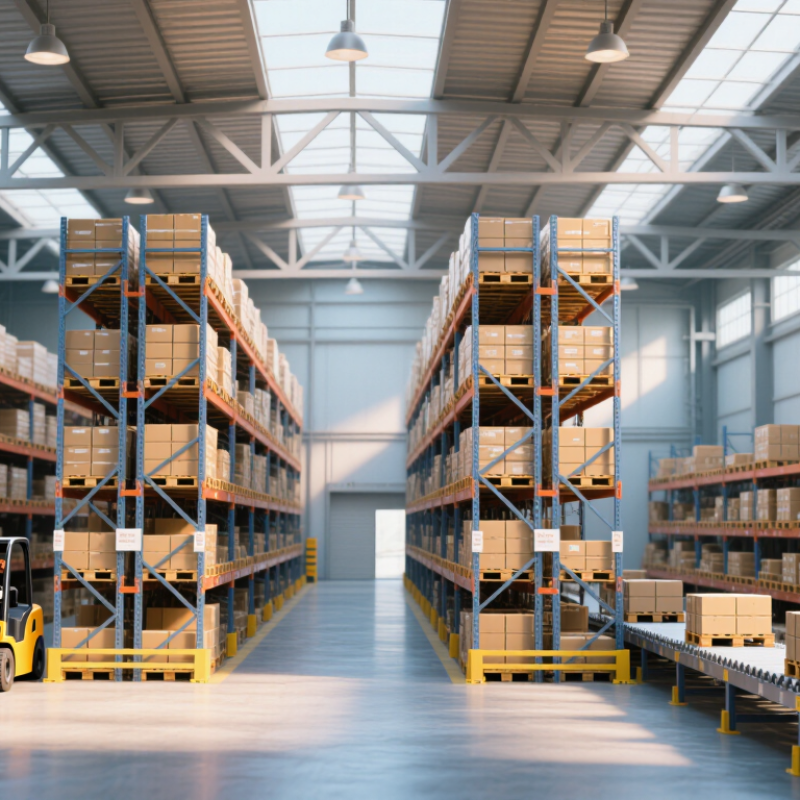
| Selective pallet rack | Standard palletized goods with varied SKUs | Direct access to each pallet; very high selectivity | Requires a forklift aisle at each rack face; generally uses more aisle space than deep-lane systems | Simple stock rotation and straightforward access to individual pallets | Lower storage density than systems that store multiple pallets deep |
| Double-deep rack | Similar goods stored two pallet positions deep | Front pallet is directly accessible; rear pallet access requires moving the front pallet | Reduces the number of aisles compared with single-deep selective layouts | Increases storage density while retaining access to multiple pallet lanes | Typically requires a deep-reach truck; selectivity and access to rear pallets are reduced |
| Drive-in / drive-through rack | Large quantities of similar products on compatible pallets | Multiple pallets are stored in lanes; selectivity is lower than selective rack | Uses deep storage lanes and fewer aisles; drive-in is generally accessed from one end, while drive-through can be accessed from both ends | High space utilization for block storage | Forklifts enter the rack structure; lane depth, pallet consistency, and operating method need careful planning |
| Push-back rack | Several pallets of the same product per lane | Loads are accessed from the aisle; pallets move on carts as new pallets are loaded | Stores multiple pallets deep while serving from one aisle face | Good density with faster access than many drive-in layouts | Uses last-in, first-out lane logic; pallet and cart compatibility is important |
| Pallet-flow rack | High-throughput, similar pallet loads requiring first-in, first-out rotation | Loading and picking occur at opposite ends of a gravity-flow lane | Deep lanes can reduce aisle count; separate replenishment and picking faces are needed | Supports FIFO flow and can separate forklift replenishment from order picking | Requires suitable pallets and careful design of rollers, brakes, lane length, and load flow |
| Cantilever rack | Long, bulky, or irregular items such as lumber, pipe, bar stock, and panels | Open-front arms provide access along the rack face; items are often handled individually or in bundles | Useful when long loads do not fit well within conventional pallet bays; aisle width must allow the chosen truck and load to maneuver safely | No front uprights obstructing the stored length; arm levels can be adjusted for different load sizes | Arm, column, and bracing capacity must match the load; long loads need suitable support and handling equipment |
| Mobile pallet rack | Palletized goods where floor space is limited and access can be scheduled | Racks move on powered or mechanical bases to open a working aisle; only selected rows are directly accessible at one time | Can reduce the number of permanently open aisles by consolidating access into a movable aisle | High storage density while preserving access to stored rows when the aisle is opened | Access is sequential rather than simultaneous; floor condition, system controls, safety devices, and retrieval frequency are important design factors |