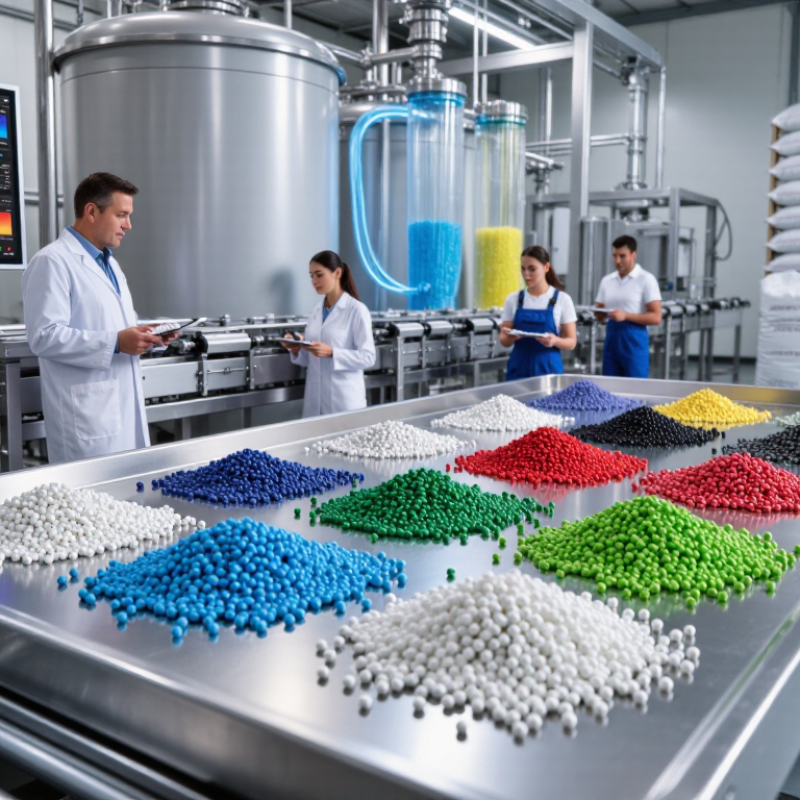
Key Types and Applications of PE Masterbatch
PE masterbatch combines concentrated pigments or functional additives with a polyethylene carrier. Color grades add consistent shades to packaging films, shopping bags, caps, and molded containers. Black masterbatch is common in pipes, cable protection, and outdoor products, where opacity and weather resistance matter. White grades use titanium dioxide to improve brightness and coverage. Additive grades can support UV stability, slip, anti-blocking, or antistatic performance. The right choice depends on the resin, processing method, and product requirements.
Applications vary by production line. Film converters often need good dispersion and reliable feeding at high output speeds. Pipe makers may prioritize carbon black content and long-term outdoor performance. Blow molding and injection molding can require different flow behavior, even when both use PE. Small differences matter. A grade that performs well in one machine may cause specks, uneven color, or surface defects in another. Testing is essential, and results should be checked under actual processing conditions.
Tips: Confirm the carrier resin is compatible with your PE grade, then trial the recommended let-down ratio. Check color, dispersion, and finished-part performance—not just the supplier’s data sheet. Keep samples from each trial for comparison. There is no universal recipe, and production teams sometimes overlook changes in recycled content or temperature. Those details can shift results, so review them before scaling up.