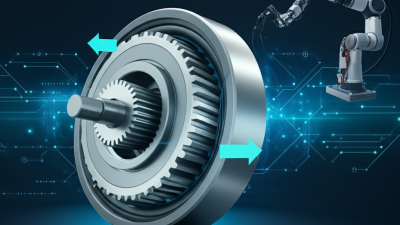
Top 10 Rack Gear Types for Global Buyers?
Choosing the right rack gear is rarely a simple catalog decision. Global buyers compare load capacity, tooth profile, material, accuracy, surface treatment, mounting style, and delivery reliability. A compact steel rack may suit a robot axis, while a hardened rack may better support a heavy automated gate. The application decides.
Darle W. Dudley, a respected gear-design authority, described gear design as “a combination of art and science.” That observation remains useful today. Rack gear selection requires calculations, but field experience also matters. Misalignment, dust, lubrication, temperature, and repeated shock can change performance quickly. A specification sheet may not reveal everything.
This guide examines ten rack gear types used across automation, lifting equipment, machine tools, solar tracking systems, and industrial positioning. Each section considers practical strengths, common limitations, manufacturing details, and buyer questions. We will look at straight-tooth and helical designs, precision racks, hardened racks, stainless-steel options, plastic racks, and other application-focused forms.
Some categories overlap. That is intentional. Suppliers may use different names for similar products, and international standards are not always presented consistently. Buyers should verify pitch, module, pressure angle, allowable force, backlash, hardness, and inspection records before ordering. Ask for drawings.
The ranking is not universal. A low-cost polymer rack could outperform steel in a clean, lightweight application. Conversely, it may fail under heat, impact, or abrasive contamination. Our aim is practical judgment, not a perfect formula. The best rack gear is the one that matches the machine, operating environment, maintenance plan, and verified supplier capability.
Rack Gear Basics and Its Role in Motion Systems
Top 10 Rack Gear Types for Global Buyers
Rack gear converts rotary motion into straight-line travel through a pinion. This mechanism appears in actuators, positioning tables, lifting equipment, and automated gates. The rack stays linear while the pinion rotates. That matters.
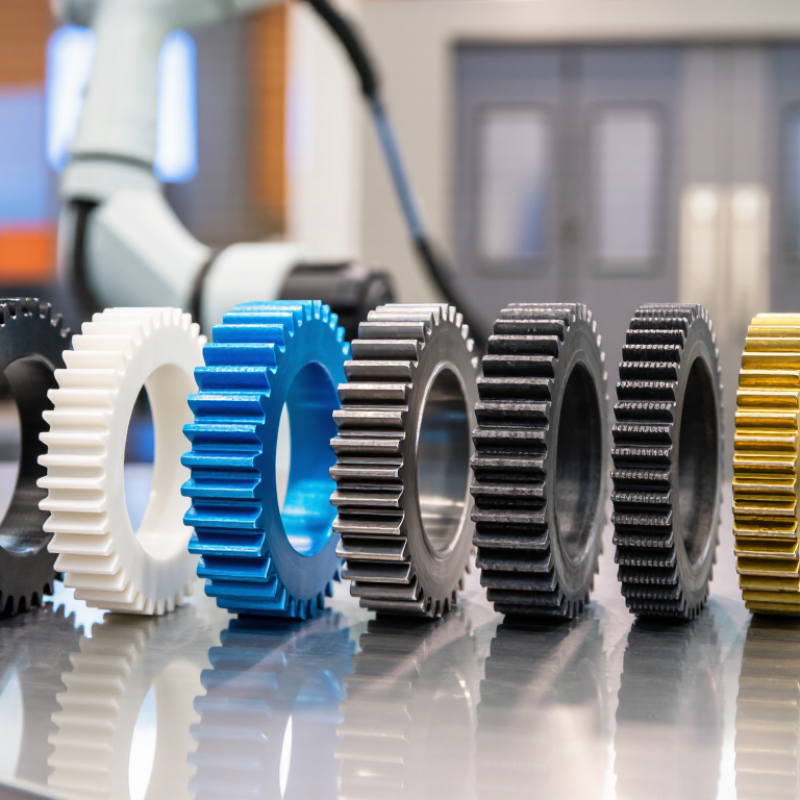
Global buyers should compare ten practical types: straight-tooth, helical, hardened, ground, machined, rolled, stainless-steel, polymer, adjustable, and precision rack gears. Each type changes noise, load capacity, cost, and service life.
Helical teeth usually run more quietly, but they create axial force. Polymer racks reduce weight, yet heat and wear may limit them. A hardened rack suits repeated motion, but poor lubrication still causes pitting.
The International Federation of Robotics reported 541,302 industrial robots installed worldwide in 2023. This figure shows why repeatable linear motion remains important in modern factories.
Rack-and-pinion systems can provide long travel without complex screw assemblies. However, buyers should check backlash, tooth accuracy, mounting straightness, and lubrication access. A tiny alignment error can become visible vibration at the carriage.
ISO 6336 calculation methods support gear load evaluation, while ISO 21771 defines key cylindrical gear terms. These references improve technical communication across suppliers.
Still, standards do not replace testing. A rack may meet its drawing and fail in dusty, hot, or poorly aligned service. That is the uncomfortable part. Specify the environment, duty cycle, impact load, and maintenance skill before choosing the lowest quotation.
Ten Major Rack Gear Types for Different Applications
Global buyers should match rack gear to workload, environment, and service access. Ten major types cover most applications: two-post racks suit lightweight network panels; four-post racks support heavier servers; enclosed server racks improve airflow control; open-frame racks simplify patching; wall-mount racks save floor space; mobile racks support temporary installations; seismic racks protect equipment in vibration-prone areas; audio racks organize amplifiers; studio racks house recording devices; industrial racks protect control hardware. The choice seems simple, but cable weight and heat often get underestimated.
Uptime Institute’s 2024 Global Data Center Survey identifies power and cooling issues among recurring outage causes. This reinforces the need for correctly sized server and network racks. The International Energy Agency reported that data centers used about 415 TWh of electricity worldwide in 2024.
Efficient airflow is no longer optional. Rack depth, perforated doors, blanking panels, and vertical cable paths directly affect operating efficiency. I have seen installations where a cheaper rack created harder maintenance later. That lesson still deserves attention.
Tips:
Check equipment depth, rail load, caster capacity, and local floor limits before ordering. Leave expansion space, but do not oversize every cabinet. For dense servers, confirm cooling capacity with measured heat output. A seismic rack may be unnecessary in one facility and essential in another. Review IEC 60297 dimensions and applicable local safety requirements. One detail is easy to miss: accessories can consume more usable space than expected.
Material, Tooth Profile, and Manufacturing Options
Top 10 Rack Gear Types for Global Buyers?
Material, Tooth Profile, and Manufacturing Options
Rack gears may look simple, but material choice controls their working life. Carbon steel suits general automation and moderate loads. Alloy steel performs better under repeated shock and high torque. Stainless steel helps in humid or washdown environments, although it can cost more and gall without proper lubrication. Engineering polymers reduce noise and weight. They also need careful temperature checks. The World Steel Association reported global crude steel production of about 1.89 billion tonnes in 2023, showing steel remains central to industrial equipment supply.
Tooth profile deserves equal attention. Straight teeth offer simpler machining and lower cost. Helical teeth engage more smoothly and reduce impact noise, but they create axial force. For compact linear actuators, this detail affects bearing selection. In practical inspections, uneven contact often comes from poor alignment, not weak steel. That mistake is easy to miss. ISO 6336 calculation methods can support load and fatigue evaluation, but real testing still matters.
Manufacturing options include milling, hobbing, shaping, grinding, and injection molding. Cut teeth fit many medium-duty systems. Ground teeth provide better pitch accuracy for robotics and positioning equipment. Molded polymer racks can support quiet, low-load movement. A 2024 industrial automation report by Grand View Research estimated strong market growth through 2030, increasing demand for repeatable motion components. Buyers should request hardness, pitch tolerance, surface treatment, and inspection records. I would also question unusually low prices. They may reflect thinner sections, inconsistent heat treatment, or incomplete testing.
Key Buying Criteria for Global Industrial Buyers
Top 10 Rack Gear Types for Global Buyers?
Key Buying Criteria for Global Industrial Buyers
Global buyers should evaluate rack gear by application, not appearance alone. Confirm the required load, travel distance, mounting position, and operating speed. A rack for a compact actuator may fail under dust, vibration, or repeated shock. Measure the mating pinion carefully. Even a small pitch mismatch can create noise, backlash, and early wear. Short samples help verify engagement before a large order.
Material selection also deserves practical attention. Carbon steel can suit controlled indoor environments, while stainless steel or protective coatings may perform better near moisture. Ask for hardness data, dimensional tolerances, surface treatment details, and inspection records. Check whether teeth remain consistent across the full length. This is often overlooked. It should not be. For long racks, packaging must prevent bending during ocean transport. Wooden supports, sealed wrapping, and clear part identification reduce receiving problems.
Compliance and supply reliability matter as much as technical fit. Request product drawings, material declarations, test reports, and traceable batch information. Confirm whether documentation supports your destination’s machinery and workplace requirements. Compare total landed cost, including tooling, freight, duties, replacement parts, and installation time. A low unit price can hide expensive alignment work. Lead times should include production, inspection, packing, and customs clearance. Buyers should also test communication quality before placing a major order. If replies are vague, technical clarification may become slower later. I would still leave room for review, because real operating conditions often expose assumptions that drawings cannot.
Top 10 Rack Gear Types for Global Buyers
Typical nominal rack height by equipment type, expressed in rack units (U). One rack unit equals 44.45 mm of vertical mounting space, while the common equipment mounting width is 19 inches.
Rack height is only one part of the purchasing decision. Global industrial buyers should also verify load capacity, cooling and airflow, ingress protection, seismic performance, cable routing, power distribution, corrosion resistance, delivery requirements, and compliance with local electrical and safety standards.
- Server and network racks: commonly use 42U to 48U formats for high-density equipment.
- Wall-mount and AV racks: typically use compact 6U to 18U formats where floor space is limited.
- Outdoor and industrial racks: should be selected according to environmental exposure, temperature range, dust and water protection, and enclosure material.
- Battery and seismic racks: require careful review of static load, anchoring, vibration resistance, and installation conditions.
Standards, Quality Checks, and International Sourcing Factors
Top 10 Rack Gear Types for Global Buyers?
Global buyers commonly source server racks, network racks, wall-mount racks, open-frame racks, seismic racks, outdoor cabinets, audio racks, battery racks, portable racks, and cable-management frames. Each type needs different verification. A server rack may require 19-inch compatibility under IEC 60297, while an outdoor cabinet needs tested ingress protection, corrosion resistance, and thermal control. Rack depth, rail adjustment, load rating, grounding, and caster strength should match the installed equipment.
Quality checks must be measurable, not based on polished photographs. Request material certificates, dimensional drawings, welding records, coating specifications, and load-test results. Check door alignment, thread accuracy, airflow openings, and packaging compression. The IEA’s Electricity 2024 report estimates data centers used about 460 TWh globally in 2022 and may exceed 1,000 TWh by 2026. This makes airflow and power-density testing increasingly important. Small design errors can become expensive heat problems.
International sourcing adds another layer. Confirm HS codes, pallet dimensions, moisture protection, spare-part availability, and inspection responsibility before payment. The World Bank’s 2023 Logistics Performance Index shows that customs efficiency and shipment tracking remain uneven across markets. Plan for that uncertainty. I have seen suppliers pass appearance checks while missing rail tolerances. A third-party inspection helps, but it is not perfect. Buyers should compare samples against production units, review corrective actions, and keep acceptance criteria in writing. Supplier certificates can be useful. They still need verification.