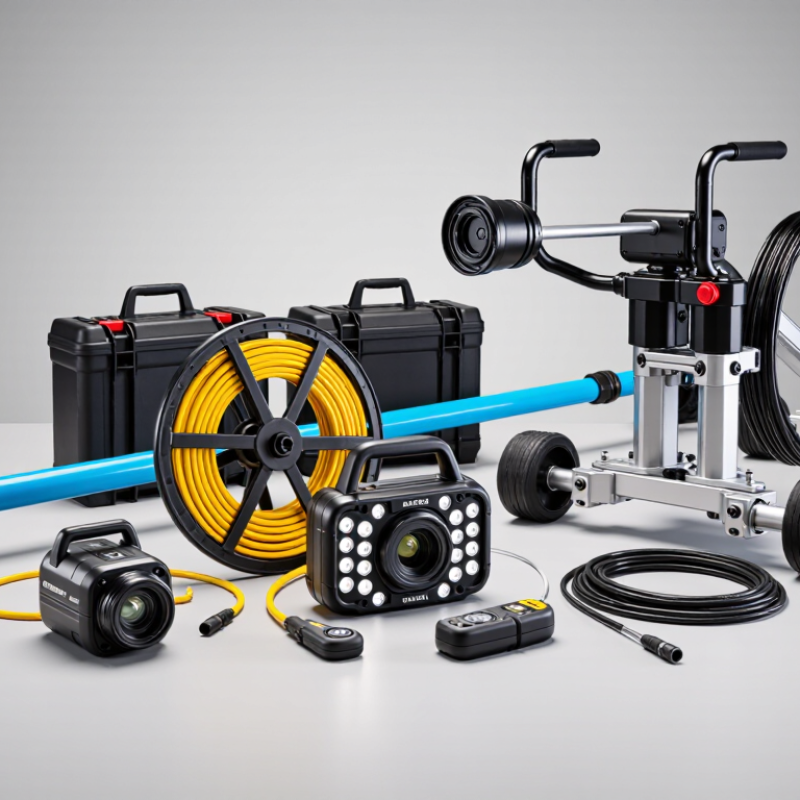
What Are the Top Sewer Inspection Cameras to Buy?
For 6–12 inch sewer lines, a reel camera should balance reach, image quality, and control. In field inspections, a flexible push cable helps navigate bends without excessive force. A self-leveling camera head keeps the picture upright, making cracks and offset joints easier to assess. Strong LED lighting matters, especially inside older clay or heavily stained pipes. Choose a system with a durable reel, clear footage, and a waterproof camera head rated for repeated use.
Pan-tilt control adds more value when the pipe has multiple connections or suspicious damage. Operators can inspect lateral openings, service entries, and joint separations without moving the entire reel. A built-in sonde also helps locate the camera beneath concrete, soil, or landscaping. However, no camera handles every bend perfectly. I have seen excellent footage fail because the cable was too stiff for a tight transition. Specifications can look convincing, but practical handling still decides the result.
Tips: Match the camera head to the pipe diameter. Test the sonde and locator before entering the line. Clean the lens often. Record distance markers during inspection. Keep the cable steady near fragile joints. A brighter image is not always better if glare hides surface defects. Check battery condition, connector seals, and footage storage before each job. Small oversights can weaken an otherwise reliable inspection.