Request Quote

Request a quote from Nidec Drive Technology America Corporation.

This quote form is intended for customers and partners in North America seeking information about Nidec Drive Technology America Corporation’s Precision Gearing Technologies. For inquiries related to the Nidec motor group division or from outside this region, please visit the global Nidec Group website to find the appropriate regional or product-specific contact.

Subscribe to Nidec Newsletter

Subscribe to our email newsletter to stay current with our precision gearing solutions, featured products, company updates, and industry news.

China Top Solid State Diode Laser Manufacturers

China has become an important sourcing destination for industrial and research laser equipment. Buyers comparing China’s top Solid State Diode Laser manufacturers should look beyond catalog prices and headline power ratings. A Solid State Diode Laser may be used for pumping, materials processing, medical equipment, or laboratory work, and each application places different demands on its output. The right supplier is not always the one with the broadest product list.

This article introduces manufacturers and practical criteria for evaluating them. Compare wavelength, output power, beam quality, stability, cooling requirements, and expected service life. Ask for test data that matches your operating conditions, not only ideal laboratory results. Clear documentation matters. So does support after delivery, including troubleshooting, spare parts, and realistic lead times. Certifications and quality claims should be checked against current records rather than accepted at face value.

A specification sheet can look cleaner than a laser behaves after hours of operation. That deserves attention. Where possible, request a sample evaluation or discuss a comparable installation with the supplier. Also consider how easily the laser will integrate with your existing optics, controls, and thermal management. No single checklist can replace application-specific testing, and published information may leave gaps. The manufacturers discussed here should therefore be treated as candidates for further review, not as a universal ranking. Careful comparison can help buyers make a more informed choice.

China Top Solid State Diode Laser Manufacturers

What Defines a Solid-State Diode Laser?

What defines a solid-state diode laser? The term usually describes a laser system in which semiconductor diodes pump a solid gain medium, such as a crystal or glass. The diode supplies energy; the solid material produces the laser output. Inside the resonator, mirrors guide light through the gain medium and reinforce selected wavelengths. The exact design depends on the material, pump wavelength, cavity, and cooling method. The terminology is not always used consistently, which can confuse even careful readers.

This differs from a direct diode laser, where the semiconductor itself generates the output beam. The distinction affects wavelength options, beam characteristics, and system design. A diode-pumped solid-state laser may offer a stable, well-shaped beam, but performance varies with its components and operating conditions. Different architecture, different trade-offs. A label alone does not establish quality.

When evaluating a system, check its gain medium, pump configuration, and thermal specifications. Look for details such as pulse duration, repetition rate, beam profile, and stated operating temperature. Heat can shift alignment or reduce output stability, even when the room feels cool. Specifications also need context: test conditions matter. It is easy to compare headline power figures and miss the details that determine whether a laser suits a real application.

How Solid-State Diode Lasers Are Designed and Manufactured

Designing a solid-state diode laser starts with the output target: wavelength, power, beam quality, and operating temperature. Engineers select a gain crystal, such as Nd:YAG, then match it to pump diodes and cavity mirrors. The optical parts sit on a heat spreader, often copper, because uneven heating can shift alignment and reduce stability. Small details matter. A slight gap in a mount or excess solder can create a local hot spot.

Manufacturing turns that design into a repeatable assembly. Technicians inspect crystal surfaces, bond diode modules, align the resonator, and measure output power, wavelength, and beam profile. Each unit then undergoes thermal cycling and extended operation tests.

Grand View Research’s 2024 laser technology market report estimated the global market at USD 20.47 billion in 2023, with a projected 7.7% compound annual growth rate through 2030. That broad market figure is not a measure of manufacturing quality, but it reflects rising demand for dependable systems. A clean test result is reassuring, not conclusive; long-term drift can still expose weaknesses in bonding or cooling. Manufacturers should record test conditions and tolerances, not just headline power.

Where Solid-State Diode Lasers Are Used

Solid-state diode lasers are used wherever a stable, focused beam can improve a practical task. In manufacturing, they can mark part numbers on metal components, trim thin materials, or support precision welding. The exact job depends on wavelength, pulse duration, and output power. A small marking system is not automatically suitable for cutting.

In research laboratories, these lasers provide controlled light for spectroscopy, microscopy, and optical experiments. Researchers may value consistent output more than raw power. A narrow beam can help illuminate a sample without flooding the surrounding area. Small details matter.

Medical and aesthetic equipment may also use solid-state diode laser sources for selected procedures. Here, wavelength and pulse settings must match the intended tissue and device design. Trained professionals need to follow approved operating procedures; a laser’s compact size does not make it harmless. This is easy to underestimate.

Some systems are used in sensing and measurement, including instruments that analyze reflected light. Performance can change with temperature, alignment, and the material being measured. For buyers, the application should guide specifications—not the other way around. I would still check real test conditions, because a brochure rarely shows every limitation.

Where Solid-State Diode Lasers Are Used

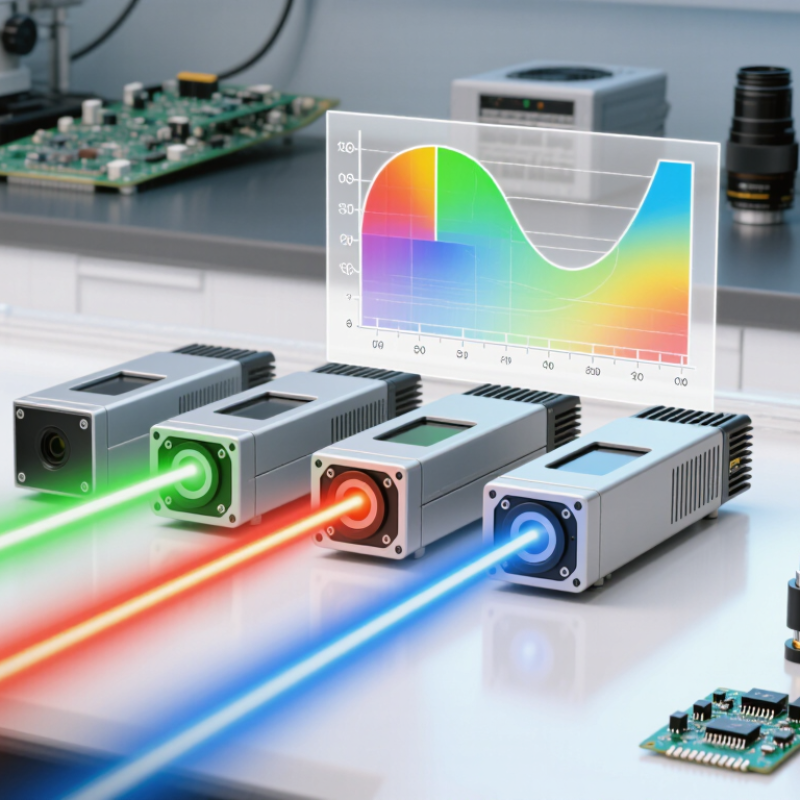
Representative diode-laser wavelengths associated with common applications

Diode lasers are used to pump solid-state and fiber lasers, for direct industrial heating and processing, in dermatological treatments, and in LiDAR and rangefinding. The wavelengths shown are representative examples, not exclusive specifications; actual wavelengths vary by system and application.

Leading Solid-State Diode Laser Manufacturers in China

China Top Solid State Diode Laser Manufacturers

Leading Solid-State Diode Laser Manufacturers in China

China-based manufacturers offer a range of diode lasers and diode-pumped solid-state systems for research, industrial processing, and medical equipment. The terminology can be confusing: a diode laser and a solid-state laser pumped by diodes are not the same product. Confirm the laser architecture before comparing suppliers. Check wavelength, output power, beam quality, cooling method, and operating life against your actual application.

Tips: Request a test report for the exact configuration you plan to buy. Ask how output stability is measured, and whether the cooling unit is included. Small details matter.

A careful supplier comparison should include sample testing, documentation, and clear service terms. Ask for performance data under realistic operating conditions, not only peak ratings. Inspect the beam profile and temperature behavior during a sustained run. These checks can reveal issues that a short demonstration misses. A polished datasheet is useful, but it is not the whole story; I would still leave room for uncertainty until the system is tested in its intended setup. Reliable communication about limits and maintenance needs is also a practical sign of technical maturity.

China Top Solid State Diode Laser Manufacturers - Leading Solid-State Diode Laser Manufacturers in China

The table below summarizes common diode-pumped solid-state laser product configurations and selection criteria. It is a technical overview, not a company ranking or a set of company-specific specifications; actual performance depends on the product design.

Laser Configuration Typical Output Wavelength Operating Characteristics Common Applications Key Specifications to Compare
Near-infrared DPSS 1064 nm is a common Nd:YAG and Nd:YVO4 output wavelength Available in continuous-wave and pulsed designs; output power and pulse parameters vary by model Metal marking, engraving, micromachining, scientific instrumentation, and pumping of wavelength-converted lasers Average output power, pulse energy, pulse duration, repetition rate, beam quality, and stability
Green frequency-doubled DPSS 532 nm, commonly generated by frequency-doubling a 1064 nm source May be designed for continuous-wave or pulsed operation; conversion efficiency and thermal management affect performance Precision marking, inspection, fluorescence excitation, and applications requiring visible green output Output power, wavelength stability, beam quality, pulse characteristics, and long-term power stability
Ultraviolet frequency-converted DPSS 355 nm, commonly produced through frequency conversion of a 1064 nm source Often used in pulsed systems; optical coatings and conversion components are important service-life considerations Fine-feature marking, microelectronics processing, precision material processing, and some scientific applications Pulse energy, pulse duration, repetition rate, spot quality, wavelength stability, and component lifetime
Deep-ultraviolet frequency-converted DPSS 266 nm, commonly produced through further frequency conversion of a 1064 nm source Specialized configuration; usable output and maintenance requirements depend strongly on the optical design Selected microprocessing, spectroscopy, and other applications requiring shorter-wavelength ultraviolet light Output stability, pulse energy, repetition rate, beam profile, environmental requirements, and service interval
Q-switched DPSS Commonly available at 1064 nm and, with frequency conversion, at 532 nm or 355 nm Produces short pulses; pulse duration and repetition rate are design-dependent and should be checked for the intended process Marking, engraving, micromachining, and applications needing high peak power Pulse duration, pulse energy, repetition rate, peak power, beam quality, and triggering compatibility
Continuous-wave DPSS Commonly available at 1064 nm; other wavelengths may be available through frequency conversion Provides continuous output; cooling method and thermal design influence stability and duty-cycle performance Precision processing, optical pumping, laboratory systems, and other continuous-output applications Continuous output power, power stability, beam quality, cooling requirements, and operating temperature range

How to Compare Chinese Solid-State Diode Laser Manufacturers

When comparing Chinese solid-state diode laser manufacturers, begin with the operating conditions your equipment actually needs. Define the wavelength, output power, pulse or continuous-wave mode, beam quality, and daily duty cycle. Ask for test data at those settings, not only headline specifications. A useful report shows measurement conditions, tolerances, and output stability over time. Check how the unit handles heat; inspect cooling connections, airflow clearance, and temperature limits. Small details matter. A datasheet can still leave gaps, especially around long-term performance and the test setup.

Compare the same criteria across suppliers in a simple table. Include optical efficiency, electrical input, footprint, control interfaces, warranty terms, and expected service response. If possible, evaluate a sample with your own power supply and cooling system. Record output drift after warm-up, then repeat the test at your normal duty cycle. Numbers matter. Ask who performs final inspection and what records accompany each unit. Clear answers are useful, but vague promises deserve follow-up questions. No scorecard is perfect; weighting each criterion can feel subjective. I would not choose on price alone, even when the budget is tight. A practical comparison should reveal both measurable strengths and unresolved questions.