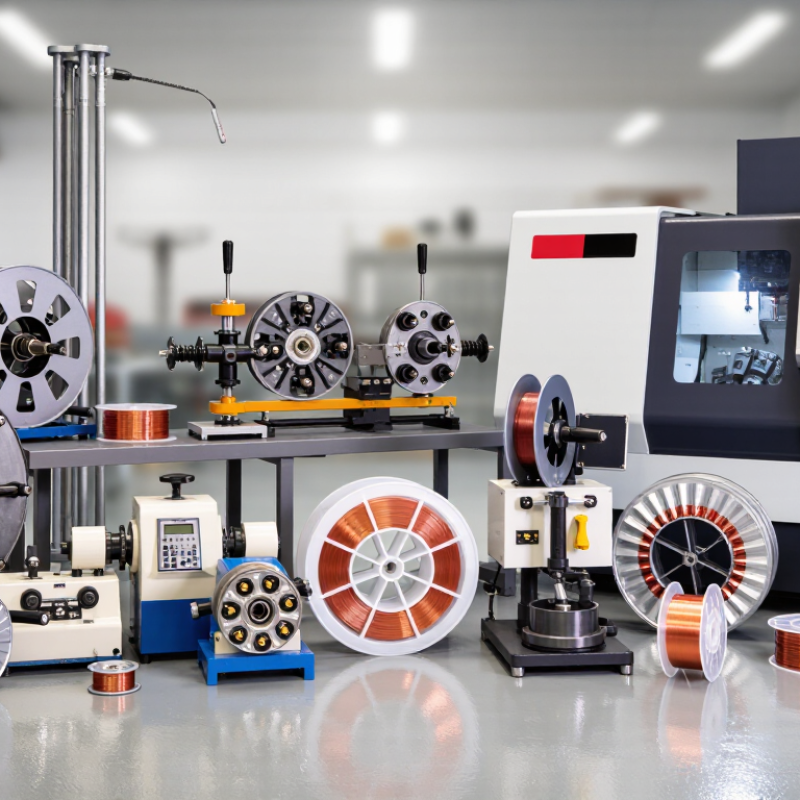
Top 10 Wire Winder Types for Global Buyers
How Wire Winder Types Are Classified
Wire winders are classified by movement, wire size, spool design, and control method. In production audits, I check these details before comparing prices. The ten common types include manual, semi-automatic, automatic, traversing, coil, spool, reel-to-reel, precision, high-speed, and multi-spindle winders. Each type fits a different process. A manual winder suits small batches and frequent wire changes. An automatic model supports stable, repeated production. A traversing winder guides wire evenly across a spool. Small differences matter.
Classification also depends on the wire material and finished shape. Coil winders handle compact circular coils. Precision winders control pitch, tension, and layer placement. High-speed machines favor output, but they may increase heat and wire stress. Multi-spindle designs process several wires together. Reel-to-reel systems reduce handling between unwinding and winding stages. For thin wire, tension control is critical. For rigid wire, motor torque deserves closer inspection. Do not trust labels alone.
Global buyers should compare wire diameter range, winding width, rotation speed, tension accuracy, and changeover time. Environmental conditions also influence selection. Dust, humidity, and unstable power can affect performance. I have seen a fast machine underperform because its tension sensor was poorly matched. That mistake was expensive. Specifications can be incomplete, and supplier claims need practical verification. Request sample winding, test records, spare-part details, and operator training terms before purchase. The “best” type is rarely universal.