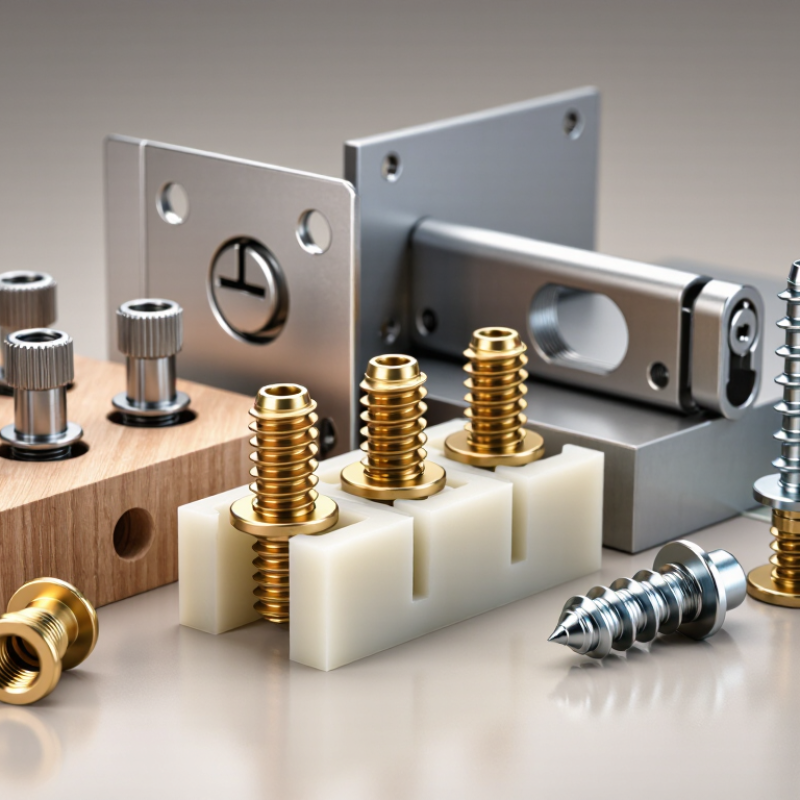
| Heat-Set Inserts | A heated installation tip softens the surrounding thermoplastic as the insert is pressed into a prepared hole. The plastic flows around the insert and solidifies as it cools. | Thermoplastic parts, including many 3D-printed components | Can provide durable metal threads and good resistance to pull-out and rotation when correctly installed. | Hole size, insert geometry, temperature, and installation depth must suit the plastic and insert. Excessive heat or pressure can damage the part. |
| Ultrasonic Inserts | Ultrasonic vibration and pressure generate localized heat, allowing the insert to embed into a prepared thermoplastic hole. | Thermoplastic molded parts and assemblies suitable for ultrasonic equipment | Fast, repeatable installation can be suitable for production environments. | Requires compatible ultrasonic equipment and carefully controlled force, vibration, and alignment. Not every plastic or part geometry is suitable. |
| Press-Fit or Knurled Inserts | Pressed into a hole, typically at room temperature. Knurls, ribs, or other external features engage the surrounding material. | Plastics, metals, and other materials, depending on insert design and hole preparation | Simple installation with little or no heating; suitable designs can provide resistance to rotation. | Retention depends on material, hole tolerance, wall thickness, and insert geometry. Excessive interference can crack or deform the workpiece. |
| Molded-In Inserts | Positioned in a mold before the plastic is injected or formed around the insert. | Injection-molded thermoplastics and some molded thermoset parts | Integrates the threaded feature during part production and can provide strong mechanical anchoring. | Requires insert placement and mold design. The insert must tolerate the molding process, and the surrounding material needs adequate support. |
| Self-Tapping Inserts | Driven or screwed into a prepared hole. External cutting edges or forming features create or engage with the surrounding material. | Selected plastics, wood, and soft metals, depending on insert design | Can create a threaded attachment point without molding the insert into the part. | Use the specified pilot-hole size and installation method. Cutting-style and thread-forming designs work differently and are not interchangeable in every material. |
| Expansion Inserts | Installed in a prepared hole; a screw or installation tool expands part of the insert against the surrounding material. | Some plastics, composites, wood, and other materials, depending on design | Expansion can help secure the insert in a hole without a press-fit operation. | Expansion force must be appropriate for the workpiece. Thin, brittle, or weak materials may split or deform if the hole or installation is unsuitable. |
| Rivet Nuts (Blind Threaded Inserts) | Inserted into a pre-drilled hole and set with a hand or powered tool. The tool deforms the unthreaded portion behind the workpiece to clamp it in place. | Sheet metal, thin panels, and some plastics or composites with suitable support | Creates a threaded fastening point from one side of the workpiece, making it useful when the reverse side is difficult to access. | Requires the correct grip range, hole size, and setting tool. Workpiece thickness and material affect joint strength and deformation risk. |
| Wire Thread Inserts | A helical wire coil is screwed into a tapped parent-material hole using an installation tool; a tang, if present, may be removed afterward. | Metal components with a prepared internal thread, including some thread-repair applications | Can restore a damaged thread or provide a wear-resistant internal thread when properly specified. | Requires a dedicated hole preparation and installation sequence. The correct tap, insert length, and installation depth are important. |