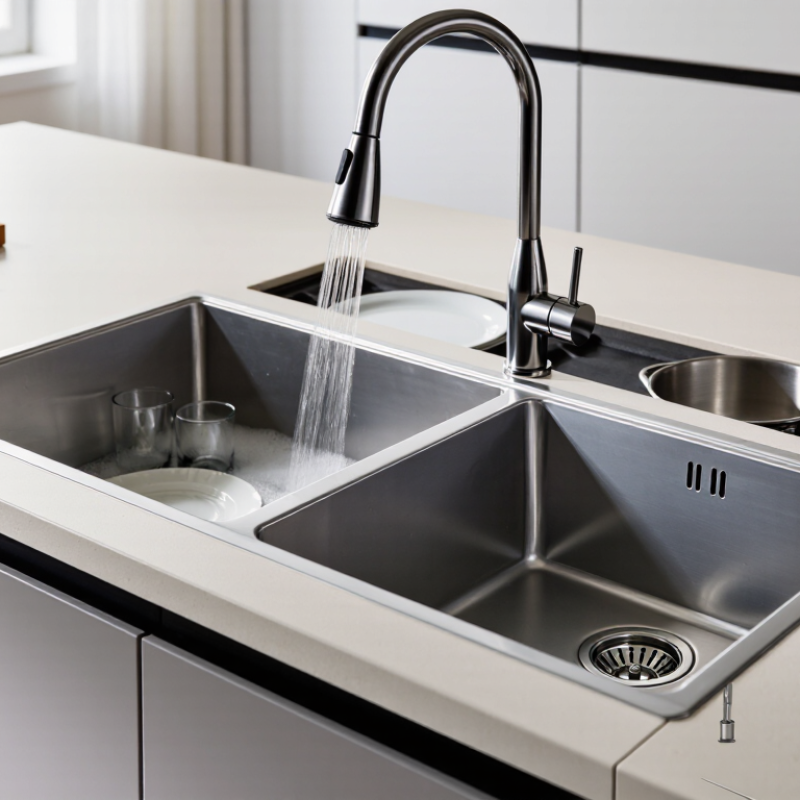
| Basic definition | A sink with two separate stainless-steel bowls, usually positioned side by side. | Two bowls allow tasks such as washing dishes in one compartment and rinsing or draining items in the other. | Choose the bowl arrangement according to cookware size, washing habits, and available cabinet space. |
| Common overall width | Approximately 30–36 inches for many residential models. | The sink must fit the countertop opening and the cabinet below it. | Measure the existing cutout, cabinet interior, faucet clearance, and plumbing position before purchasing. |
| Bowl configuration | Common layouts include equal bowls, a 60/40 split, and a ವಾದ? 50/50 split. | Equal bowls provide balanced capacity, while an offset split can create one larger compartment for pans and baking trays. | Compare the usable interior dimensions rather than relying only on the overall sink width. |
| Bowl depth | Approximately 8–10 inches is common in residential sinks. | Deeper bowls can hold more dishes but may require more bending and must clear the cabinet and plumbing. | Check the depth against the cabinet, garbage disposal or drain assembly, and the user’s comfort level. |
| Stainless-steel grade | 304 stainless steel is widely used for kitchen sinks because it offers good corrosion resistance; 316 stainless steel provides higher resistance in more aggressive environments. | The alloy affects resistance to rust, staining, and corrosion. | Look for clearly stated material specifications and avoid leaving salty, acidic, or chlorinated substances on the surface. |
| Steel thickness | Residential sinks commonly use approximately 16–20 gauge steel; a lower gauge number indicates thicker material. | Thicker steel generally provides greater rigidity and can help reduce vibration and noise. | Consider thickness together with structural support, sound insulation, finish quality, and installation method. |
| Surface finish | Brushed, satin, and lightly textured finishes are common. | Finishes influence the visibility of scratches, water spots, and fingerprints. | Clean in the direction of the existing grain and avoid abrasive pads that can create permanent marks. |
| Installation style | Top-mount, undermount, and flush-mount installations are common. | The installation style affects countertop compatibility, cleaning around the rim, and replacement difficulty. | Confirm the required cutout template and ensure the countertop material is suitable for the selected installation method. |
| Divider height | A full-height divider separates the bowls completely; a low divider sits below the rim to provide more usable washing space. | A lower divider can make it easier to wash large cookware across both bowls, but water may splash between compartments. | Choose a low divider for large cookware or a full divider when strong separation is more important. |
| Drain arrangement | Each bowl usually has its own drain opening; many kitchen sink drains are approximately 3.5 inches in diameter, depending on the region and design. | Drain placement affects usable bowl space, plumbing alignment, and compatibility with accessories. | Verify drain dimensions and the location of existing plumbing before installation. |
| Noise control | Many sinks use sound-deadening pads or sprayed coating on the underside. | Insulation can reduce the sound of running water, dishes, and garbage disposal vibration. | Check the underside for adequate coverage and install the sink firmly to prevent movement and rattling. |
| Daily cleaning | Use warm water, a mild dish detergent, and a soft cloth or non-abrasive sponge. | Routine cleaning removes food residue, grease, and moisture that can contribute to staining. | Rinse thoroughly and dry after cleaning to reduce water spots and mineral deposits. |
| Stain and limescale care | Diluted white vinegar can help dissolve mineral deposits when used briefly and rinsed thoroughly. | Hard-water minerals can leave cloudy marks and dull the appearance of the surface. | Do not mix vinegar with bleach or other cleaning chemicals, and do not leave acidic solutions on the steel for extended periods. |
| Products to avoid | Avoid steel wool, harsh scouring powders, strong acids, and prolonged exposure to chlorine or chloride-containing cleaners. | These substances may scratch the finish or increase the risk of corrosion and discoloration. | Use only cleaners labeled as suitable for stainless steel and follow the product instructions. |
| Main advantages and limitations | Advantages include task separation, durability, heat resistance, and broad compatibility with kitchen layouts. Limitations include a center divider, possible water spots, and reduced space for very large cookware. | The best choice depends on whether flexibility or maximum single-bowl capacity is the priority. | Compare the sink’s interior dimensions, divider style, cabinet fit, material specification, and cleaning requirements before deciding. |