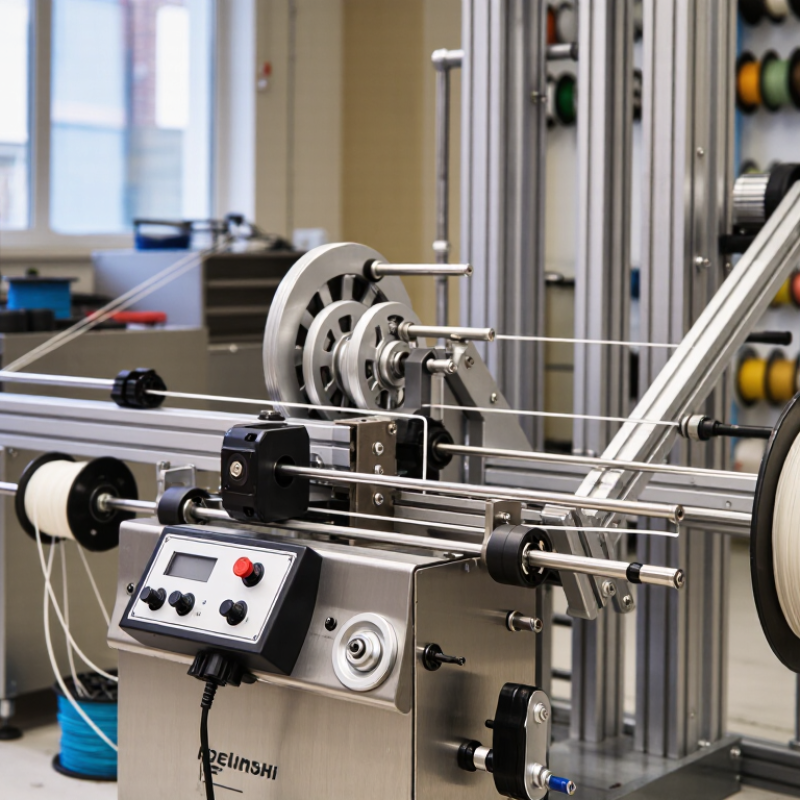
A Gelinshi stringing machine guides separate items onto a continuous cord or carrier. Its exact layout depends on the material and product, but most systems share several working parts. The frame holds the assembly steady. A hopper or feed track presents items one at a time, while guides align each piece with the stringing point. A needle or threading head passes the cord through. Small misalignments matter: a bead, bulb, or component can jam the line.
The drive motor moves the feed and threading mechanisms. A tensioner keeps the cord from sagging or pulling too tightly, and a take-up unit collects finished strands. Sensors can detect missing items or cord breaks; a controller sets speed and timing through a simple operator panel. These details are practical, not decorative.
The International Federation of Robotics reported 4,281,585 industrial robots operating in factories worldwide in 2023, illustrating how widely automated motion control is used in production. That figure describes industrial robots, not stringing machines, so it should not be treated as a machine-performance benchmark.
In practice, dusty feed tracks and changing item sizes can still upset smooth operation. The sensor may not catch every fault.