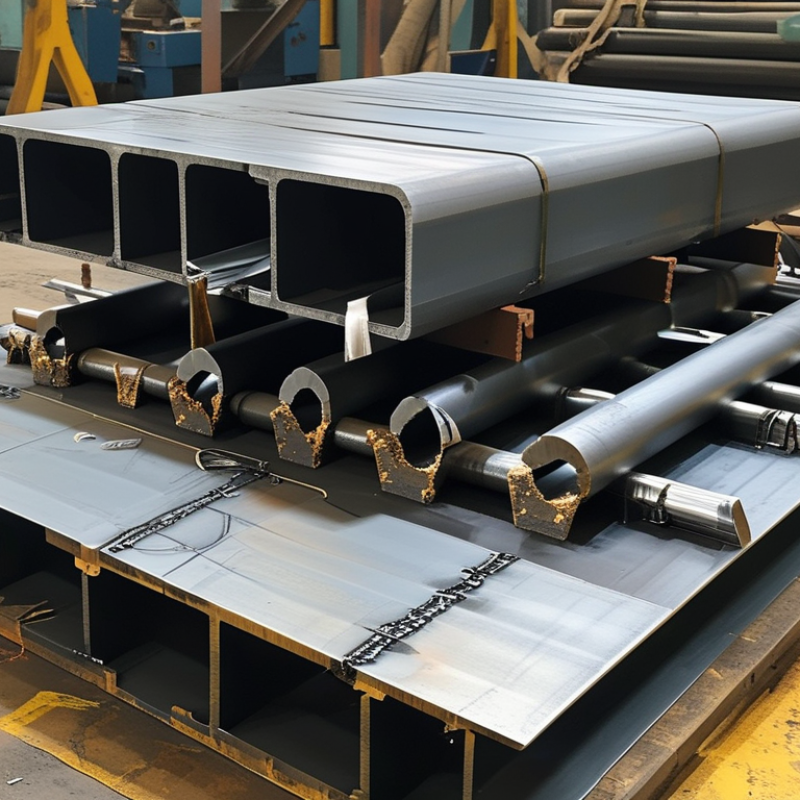
| Machine Definition | A tube-forming production line that converts metal strip or coil into hollow square or rectangular sections. | The line gradually forms a flat strip, welds the longitudinal seam, sizes the tube, and cuts it to the required length. |
| Main Raw Material | Carbon steel, galvanized steel, stainless steel, or other weldable metal strip supplied in coils. | Material selection depends on the required corrosion resistance, strength, surface finish, and end-use application. |
| Typical Tube Size Range | Approximately 15 × 15 mm to 400 × 400 mm for square tube; rectangular sizes vary according to the forming design. | The actual range is determined by the machine configuration, roll tooling, material grade, and required wall thickness. |
| Typical Wall Thickness | Approximately 0.6–16 mm, depending on the tube size, material, welding method, and line capacity. | Thicker walls generally require greater forming force, stronger tooling, and increased welding power. |
| Production Process | Uncoiling → strip leveling → forming → seam welding → bead removal → sizing → straightening → cutting → collection. | Each stage contributes to dimensional accuracy, weld integrity, surface quality, and consistent finished lengths. |
| Forming Method | Roll forming gradually bends the strip through multiple forming stands before the edges meet. | Gradual forming reduces deformation stress and helps produce a uniform square or rectangular profile. |
| Welding Technology | High-frequency induction or contact welding is commonly used for continuous longitudinal seam welding. | The welding system joins the strip edges at production speed without adding separate filler metal in typical high-frequency processes. |
| Line Speed | Common production speeds range from approximately 20 to 120 m/min; specialized lines may operate outside this range. | Actual speed depends on tube dimensions, wall thickness, steel grade, welding requirements, and cut-to-length accuracy. |
| Cutting System | Flying saw, cold saw, or other synchronized cutting equipment; common cut lengths are about 4–12 m. | A synchronized cutting system allows continuous production while maintaining consistent finished tube lengths. |
| Dimensional Control | Controlled tube width, height, corner radius, straightness, wall thickness, and cut length. | Laser or contact measurement systems may be used for online monitoring, while final checks are commonly performed with gauges and calipers. |
| Typical Control System | PLC-based control with a touchscreen operator interface, variable-frequency drives, sensors, and safety interlocks. | Automation helps coordinate forming speed, welding parameters, cutting length, alarms, and production monitoring. |
| Key Machine Sections | Uncoiler, leveler, forming mill, welding unit, weld-bead scraper, sizing mill, straightener, cutting machine, and run-out table. | The sections work as one continuous line to improve throughput and reduce manual handling between operations. |
| Typical Utilities | Electrical power, cooling water, compressed air, hydraulic or lubrication systems, and suitable ventilation. | Utility requirements vary with line size, welding power, automation level, and the selected production materials. |
| Primary Purpose | To manufacture uniform square and rectangular hollow sections continuously and efficiently. | Compared with separate manual operations, continuous production can improve consistency, output, and material utilization. |
| Common Applications | Construction frames, structural supports, machinery components, furniture, vehicle parts, agricultural equipment, and general fabrication. | Square and rectangular tubes provide useful strength-to-weight performance and are convenient for joining and fabrication. |
| Quality Checks | Visual weld inspection, dimensional measurement, straightness checks, surface inspection, and mechanical or leak testing when required. | The inspection plan should follow the applicable product standard, customer specification, and intended application. |
| Important Selection Factors | Tube size range, wall thickness, material grade, target output, welding method, changeover time, floor space, and automation level. | Selecting the machine according to the intended product mix helps avoid insufficient capacity or unnecessary investment. |