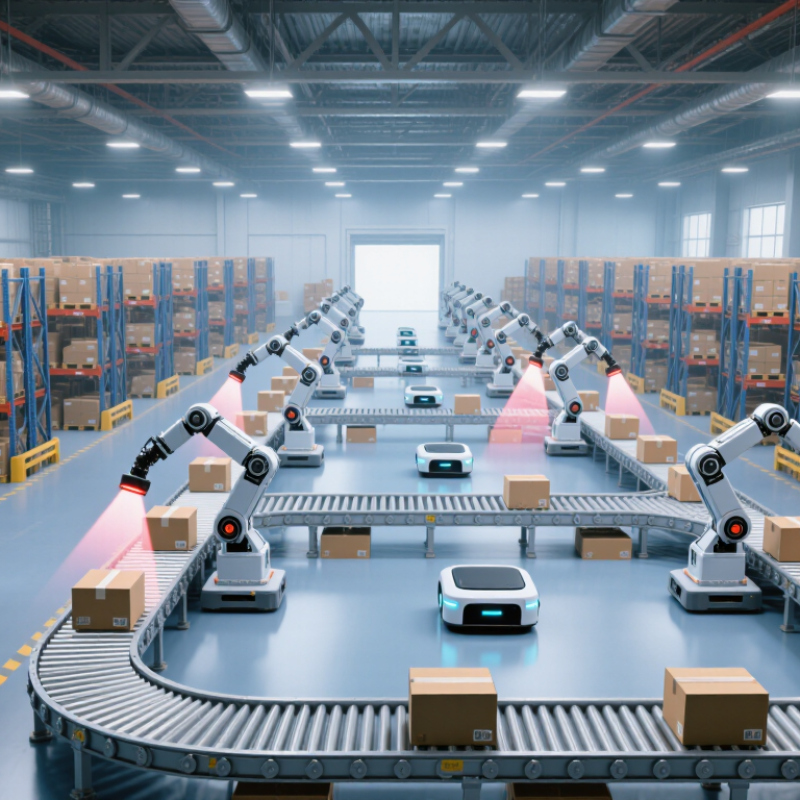
| Equipment orchestration | Coordinates conveyors, sorters, automated storage and retrieval equipment, lifts, shuttles, scanners, and robotic handling systems through a unified control layer. | Equipment status, sensor signals, task queues, location data, and communication messages. | Creates synchronized material flow and reduces conflicts between connected machines. |
| WMS and automation integration | Translates warehouse management instructions into executable equipment tasks and returns completion, error, and inventory movement events. | Order lines, inventory locations, movement requests, task confirmations, and exception codes. | Connects business-level warehouse processes with real-time machine execution. |
| Real-time visibility | Monitors equipment availability, work-in-progress, accumulation zones, blocked sections, and active warehouse tasks. | Live device states, heartbeat signals, sensor events, queue lengths, and timestamps. | Helps operators identify bottlenecks and respond before disruptions spread. |
| Routing and sequencing | Selects routes and determines task sequences according to destination, equipment availability, priority, and current traffic conditions. | Destination rules, priority levels, route availability, travel status, and buffer capacity. | Supports consistent product flow and makes better use of available automation capacity. |
| Buffer and accumulation control | Regulates the release of totes, cartons, pallets, or containers into conveyors, workstations, and storage areas. | Occupancy sensors, maximum and minimum buffer levels, release permissions, and downstream readiness. | Prevents overloading, starvation, unnecessary stops, and avoidable accumulation. |
| Exception management | Detects jams, missed scans, unavailable equipment, communication failures, and task mismatches, then applies predefined recovery rules. | Alarm codes, diagnostic messages, retry limits, equipment state changes, and operator acknowledgements. | Standardizes recovery procedures and improves visibility into the cause of downtime. |
| Workload balancing | Distributes tasks across eligible machines, lanes, stations, or storage locations based on capacity and operating status. | Open tasks, machine capacity, station availability, processing times, and workload by zone. | Reduces uneven utilization and helps maintain a stable operating rhythm. |
| Safety and interlocks | Exchanges operating permissions and stop conditions with safety systems and equipment controllers where required. | Safety-zone states, emergency-stop signals, access conditions, equipment permissions, and restart status. | Helps ensure that automated movement follows defined safety and operating conditions. |
| Performance monitoring | Records equipment events and process results for analysis of throughput, availability, cycle time, downtime, and completed tasks. | Event timestamps, processed-unit counts, fault duration, task duration, and operating states. | Provides an evidence-based foundation for maintenance, process improvement, and capacity planning. |
| Scalability and change management | Supports the addition or modification of equipment, zones, routes, task rules, and operating workflows through configurable control logic. | Equipment profiles, routing tables, zone definitions, task parameters, and workflow rules. | Makes it easier to adapt warehouse control as volumes, layouts, and automation requirements change. |