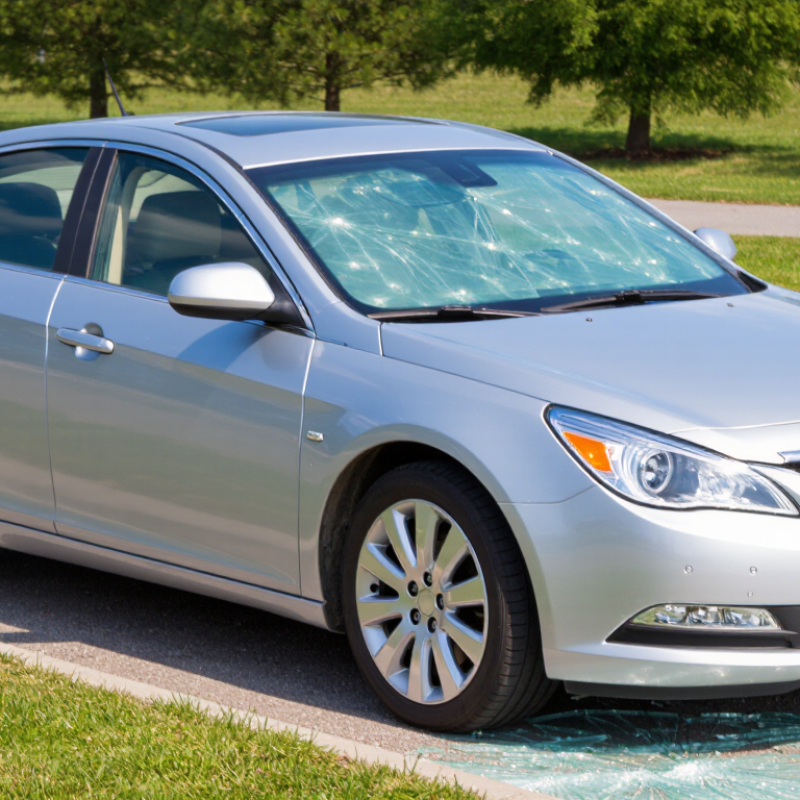
| Film construction | A transparent polymer film is applied to the inside surface of the vehicle’s glass. Security films are designed to be tougher and more tear-resistant than ordinary window tint. | Adds a layer that can help hold broken glass fragments together. | Film does not make standard vehicle glass unbreakable or convert it into bullet-resistant glass. |
| Impact response | When glass cracks, the film and its adhesive can help keep many fragments attached to the film rather than scattering freely. | May reduce loose-glass scatter during certain breakage events. | The glass can still crack, and the film may be cut, punctured, or separated under sufficient force. |
| Resistance to quick entry | By helping retain broken glass in the window opening, film may make it take longer to create an opening after the glass is struck. | Can provide an additional deterrent and may delay access. | It is not a substitute for locks, an alarm, secure parking, or other theft-prevention measures. |
| Adhesive and edges | The adhesive bonds the film to the glass. Some installations use an attachment method designed to connect the filmed glass to the window frame. | A properly specified and installed system can improve how the film and glass act together. | Performance depends on the film, glass, installation, and attachment method; not every installation includes a frame attachment. |
| Visibility and tint | Security film can be clear or combined with a tint, depending on the product selected. | Clear options can add a protective layer without intentionally darkening the view. | Tint darkness and reflective properties may be restricted by local vehicle-window laws. |
| Installation and curing | An installer applies the film to clean glass and allows the adhesive to cure according to the product instructions. | Professional installation can help reduce contamination, bubbles, and edge defects. | Drying and curing time varies; follow the installer’s guidance before lowering windows or cleaning them. |
| Emergency exit | Because film can keep cracked glass attached, an emergency exit may require additional effort if a window must be broken. | Understanding the trade-off helps owners plan for emergencies. | Keep an appropriate emergency glass-breaking tool accessible where permitted, and follow vehicle and tool instructions. |
| Care and maintenance | Once cured, the film is cleaned like a finished window surface, using products and tools approved for the film. | Routine, gentle cleaning helps preserve clarity and surface condition. | Avoid abrasive pads and follow the film manufacturer’s care instructions to reduce scratching or edge damage. |