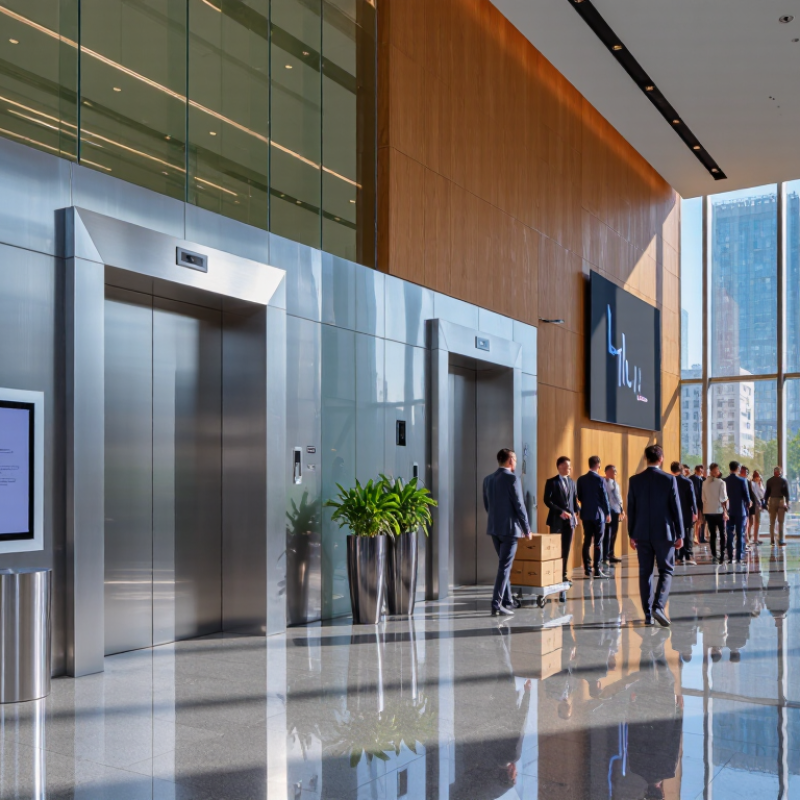
| Improved accessibility | Provides step-free movement between floors for people with mobility limitations, visitors carrying items, and building staff. | Offices, hotels, healthcare facilities, retail buildings, and public buildings. | Door widths, controls, signage, and other accessibility features should meet applicable local requirements. |
| More efficient movement between floors | Moves passengers vertically and can reduce reliance on stairs, particularly in multi-storey buildings and during busy periods. | Multi-storey workplaces, hotels, residential buildings, and shopping centres. | Lift quantity, capacity, speed, and control systems should be selected based on building height, occupancy, and traffic patterns. |
| Support for goods and equipment | A suitable goods or service lift can transport deliveries, supplies, and equipment without depending on passenger lifts. | Warehouses, hospitals, hotels, restaurants, and buildings with regular deliveries. | Check rated load, car dimensions, door size, loading method, and the size and weight of items to be moved. |
| Better separation of building traffic | Separate passenger, service, and goods routes where the layout allows, helping daily operations run more smoothly. | Hotels, hospitals, offices, and mixed-use buildings. | The lift layout should reflect circulation routes, staff workflows, security needs, and peak-use periods. |
| More usable building space | Vertical transportation can make upper floors more practical to access and use for tenants, customers, or staff. | Commercial buildings with multiple occupied floors. | Lift shafts and related equipment require floor area; assess the trade-off against circulation and lettable space. |
| Planned maintenance and safety features | Regular inspection and maintenance help keep lift equipment operating as intended; safety systems are designed to manage foreseeable operating risks. | All buildings with passenger or goods lifts. | Maintenance schedules, inspections, and safety requirements depend on the equipment and applicable local regulations. |