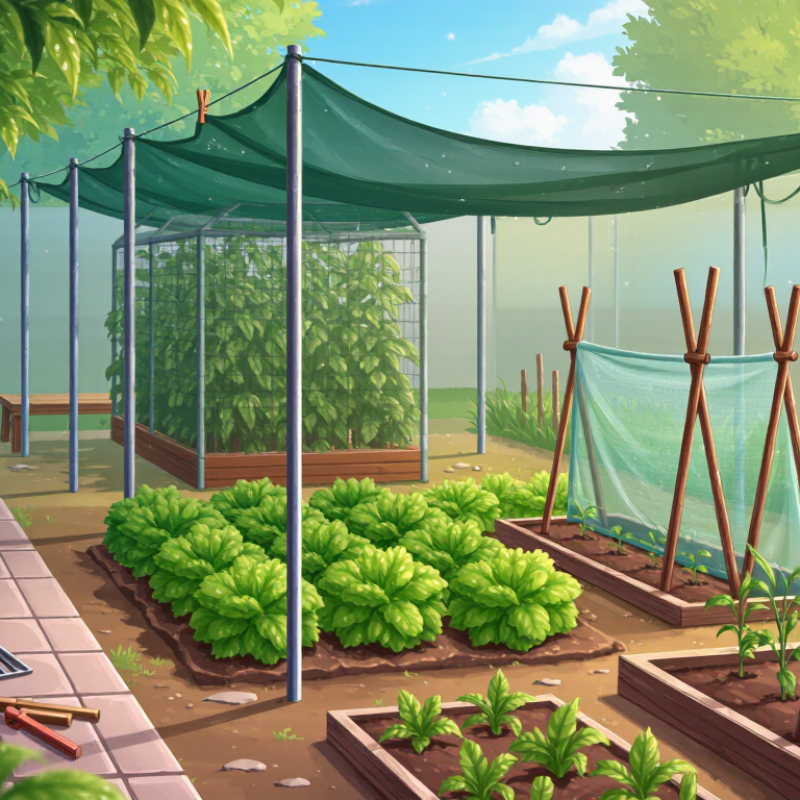
| Purpose of shade netting | Reduces direct sunlight and can help limit heat stress, sunscald, and rapid moisture loss. | It does not replace watering, ventilation, or crop-specific care. Results depend on the crop, climate, netting, and installation. | During periods of intense sun or unusually hot weather. |
| Choosing shade density | Select a shade percentage suited to the plants and local conditions; lighter shade is often preferable for sun-loving crops. | Shade percentages describe the proportion of light blocked. Check crop guidance and observe plant response rather than relying on one rate for every garden. | Before installation; adjust if plants show signs of insufficient light or heat stress. |
| Planning the structure | Use a frame, hoops, or other supports strong enough for the netting and expected wind exposure. | Keep the fabric clear of plant leaves where practical, and leave room for air to circulate and for garden access. | Before hot or high-sun periods begin. |
| Installing the netting | Drape the net evenly over the support and secure its edges with clips, ties, or suitable fasteners. | Fasten the net without excessive tension, check that it cannot flap against plants, and avoid blocking access or drainage. | When daytime heat or strong sun starts affecting plants. |
| Monitoring plants | Check leaves, soil moisture, and growth regularly after fitting the net. | Wilting can have several causes. Check soil moisture and airflow as well as light levels before changing the shade setup. | Frequently during the first few days, then as conditions change. |
| Watering under shade | Continue to check soil moisture and water according to the needs of the plants. | Shade may slow water loss, but it does not make a fixed watering schedule reliable for every bed or season. | Throughout the growing season, especially during hot, dry, or windy weather. |
| Wind and weather checks | Inspect fasteners and supports after strong winds, heavy rain, or other severe weather. | Repair loose attachments promptly. Remove or secure the net if conditions exceed what the frame can safely withstand. | After storms and during forecast periods of high winds. |
| Cleaning and care | Remove soil and plant debris using gentle cleaning methods suitable for the net material. | Follow the product care instructions; avoid harsh chemicals or abrasive tools that could damage the fabric. | As needed, and before storing the net. |
| Seasonal removal | Take down or reposition the net when plants need more light or cooler conditions return. | Seasonal timing varies by climate and crop. Inspect plants and local weather rather than using a single calendar date. | At the end of hot weather, or when the growing conditions change. |
| Off-season storage | Allow the net to dry completely, fold it loosely, and store it in a clean, dry place. | Keep it away from sharp objects, pests, and prolonged dampness. Check for tears and worn fasteners before reuse. | After seasonal removal and before the next installation. |