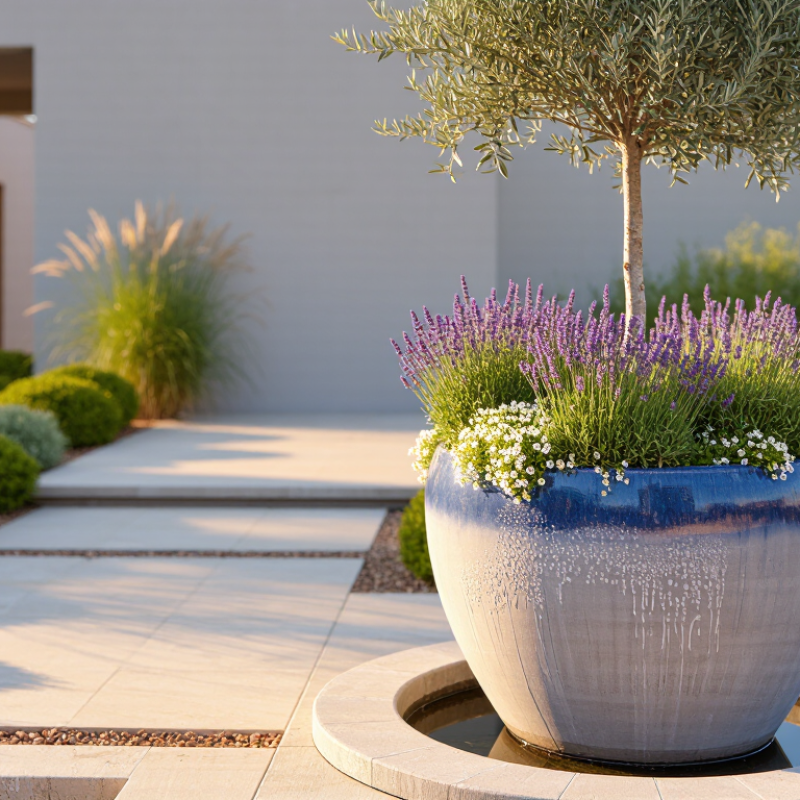
An 18-inch ceramic planter suits one compact tomato, a dwarf citrus, or a mixed annual display on a patio. At 16 inches deep, a straight-sided pot holds about 19 US gallons by cylinder-volume calculation; tapered pots hold less. A 24-inch planter, about 39 gallons at 20 inches deep, gives larger roots more room and supports combinations such as a central shrub with trailing flowers. These are estimates, not fill-line promises.
Size it for mature roots, not the nursery pot. Penn State Extension’s container-gardening guidance emphasizes drainage, while University of Maryland Extension notes that container plants need regular watering and suitable growing media. In practice, that extra soil volume can buffer hot afternoons, but ceramic walls still warm in direct sun. Feel the pot’s weight. A filled 24-inch ceramic planter can be difficult to move, so place it before adding soil. Heavy, yes. For balconies, check the surface’s load capacity.
Choose 18 inches for herbs, compact vegetables, and seasonal color; choose 24 inches for small shrubs or deeper-rooted plants. Leave room for drainage, and avoid packing soil hard around the root ball. One detail is easy to overlook: a broad pot may look generous but remain too shallow for a woody plant. I have seen that mismatch disappoint. University extension guidance is useful, but local heat, wind, and plant variety still change watering needs.