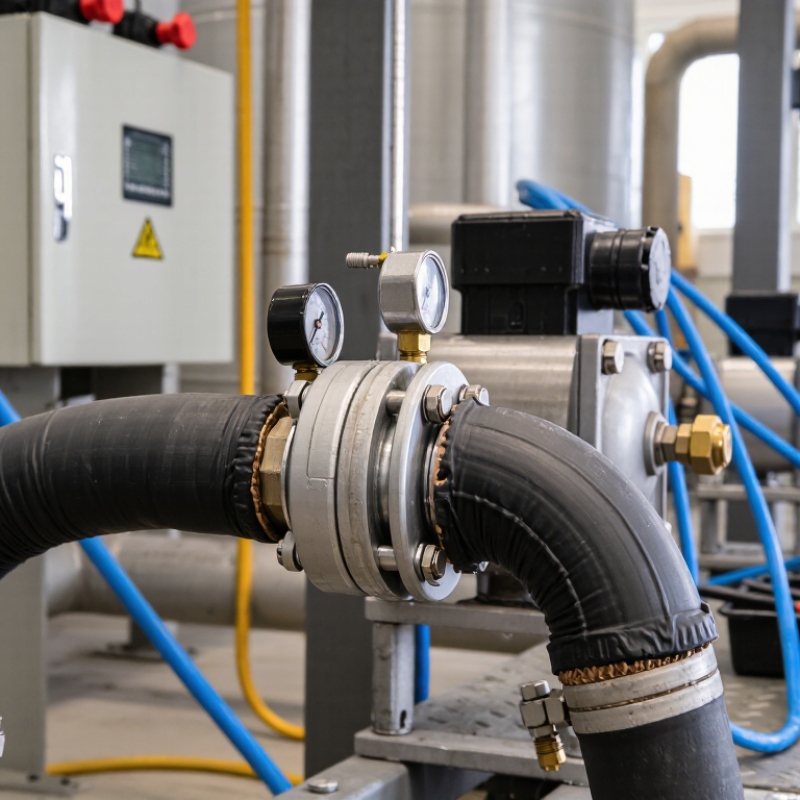
| Definition | A flexible tube made from an elastomeric rubber compound, often combined with textile, wire, or spiral reinforcement. | Provides a flexible route for transporting liquids, gases, slurries, and bulk solids. |
| Common Rubber Materials | EPDM, nitrile rubber, neoprene, silicone, natural rubber, and fluorocarbon-based elastomers are selected according to service conditions. | Material selection can improve resistance to oil, heat, weathering, chemicals, or abrasion. |
| Construction | Typical construction includes an inner tube, reinforcement layer, and protective outer cover. | The inner tube handles the conveyed medium, reinforcement supports pressure, and the cover protects against the working environment. |
| Flexibility | Rubber remains flexible over a wide range of hose sizes and can accommodate movement when correctly specified. | Helps connect moving equipment and simplifies routing in confined installations. |
| Pressure Capability | Working pressure depends on the hose design, internal diameter, reinforcement, temperature, and conveyed medium. Reinforced hoses are used for higher-pressure service. | Allows the hose to be matched to hydraulic, pneumatic, water, air, and process-fluid requirements. |
| Temperature Range | Service temperature is compound-specific. Many general-purpose rubber hoses operate approximately from -40°C to +100°C, while specialized designs may cover wider ranges. | Correct temperature selection reduces hardening, softening, cracking, and premature failure. |
| Abrasion Resistance | Heavy-duty rubber covers and abrasion-resistant inner tubes are available for contact with sand, aggregate, slurry, and other abrasive materials. | Supports longer service life in mining, construction, material handling, and bulk-transfer systems. |
| Chemical Compatibility | Resistance varies by rubber compound. The hose must be checked against the specific chemical, concentration, temperature, and exposure time. | Reduces swelling, embrittlement, permeation, and degradation caused by incompatible fluids. |
| Vibration and Movement | The elastic structure can absorb vibration and accommodate limited movement when installed without twisting or excessive bending. | Helps reduce the transmission of vibration between pumps, engines, valves, and fixed piping. |
| Bend Radius | The minimum bend radius is specified by the hose design and must not be exceeded during installation or operation. | Maintaining the specified bend radius helps prevent kinking, flow restriction, reinforcement damage, and fatigue. |
| Typical Applications | Hydraulic systems, compressed air, water transfer, steam service, chemical processing, fuel handling, slurry transfer, and material conveying. | One hose category can serve multiple industries when its material, reinforcement, fittings, and ratings are correctly selected. |
| Installation Requirements | Use compatible fittings, avoid twisting, support heavy assemblies, protect against sharp edges, and keep the hose away from excessive heat or mechanical damage. | Proper installation is essential for achieving the hose's rated pressure, flexibility, and service life. |
| Inspection and Replacement | Inspect regularly for cuts, abrasions, blistering, exposed reinforcement, cracks, leaks, kinks, and coupling damage. Replace a hose when damage or age-related deterioration is identified. | Routine inspection helps prevent unplanned leaks, production interruptions, and safety incidents. |