| Hinges | Secure attachment, smooth movement, and a published durability rating where available. | Check the manufacturer’s cycle-test rating and confirm the hinge is suitable for the door’s size and weight. There is no single cycle rating that applies to every cabinet. | Helps prevent doors from sagging, shifting, or detaching when correctly selected and installed. | Doors open and close more consistently and are easier to align. |
| Drawer slides | Stable travel, secure locking or stop features, and a clearly stated load rating. | Compare the drawer’s expected contents with the rated capacity. Confirm whether the rating applies to the slide pair and to the intended mounting arrangement. | Reduces the risk of an overloaded or poorly supported drawer pulling out unexpectedly. | Drawers move more smoothly and are less likely to bind under normal use. |
| Cabinet mounting fasteners | Fasteners and installation method suited to the cabinet, wall construction, and expected load. | Follow the cabinet maker’s installation instructions; wall cabinets should be secured to appropriate structural framing or blocking, not supported by drywall alone. | Proper attachment helps reduce the risk of a cabinet coming loose from the wall. | A firmly mounted cabinet is less likely to shift during opening and closing. |
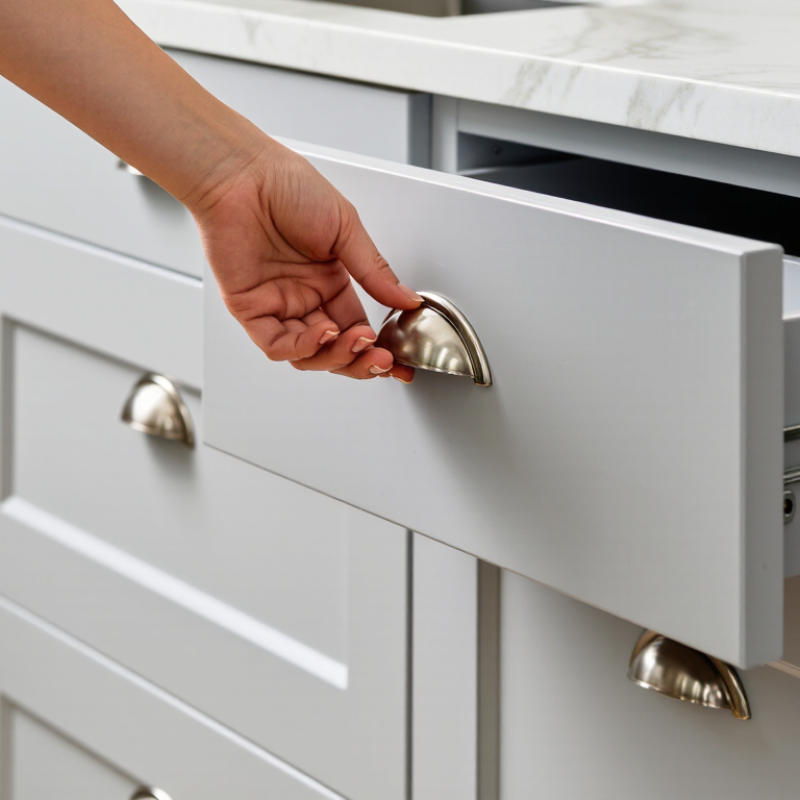
| Handles and pulls | Secure fastening, comfortable grip, and edges that are not sharp or damaged. | Use fasteners that match the handle design and cabinet-front thickness; check that the handle remains tight during routine use. | A secure, comfortable grip helps reduce slips while opening doors and drawers. | Consistent placement and a suitable grip make frequent opening easier. |
| Finish and corrosion resistance | Materials and finishes appropriate to the room’s moisture and cleaning conditions. | For humid areas, check the product’s stated corrosion-resistance information and care instructions; performance varies by material, finish, and exposure. | Helps keep hardware functional and free from deterioration that could create rough or weakened surfaces. | Appropriate finishes are easier to maintain and can retain their appearance longer. |
| Soft-close mechanisms | Damper operation, compatible hinges or slides, and adjustment options. | Test that the door or drawer slows before closing. Soft-close reduces impact but does not make a moving door or drawer pinch-proof. | Reduces slamming and impact; users should still keep fingers clear of closing gaps. | Quieter closing and less abrupt movement during daily use. |
| Routine inspection | Loose screws, unusual noise, uneven gaps, corrosion, or changes in movement. | Inspect periodically and after heavy use; tighten or adjust hardware according to the product instructions. | Early attention to looseness or damage can help prevent hardware failure. | Small adjustments can restore smooth, reliable operation. |