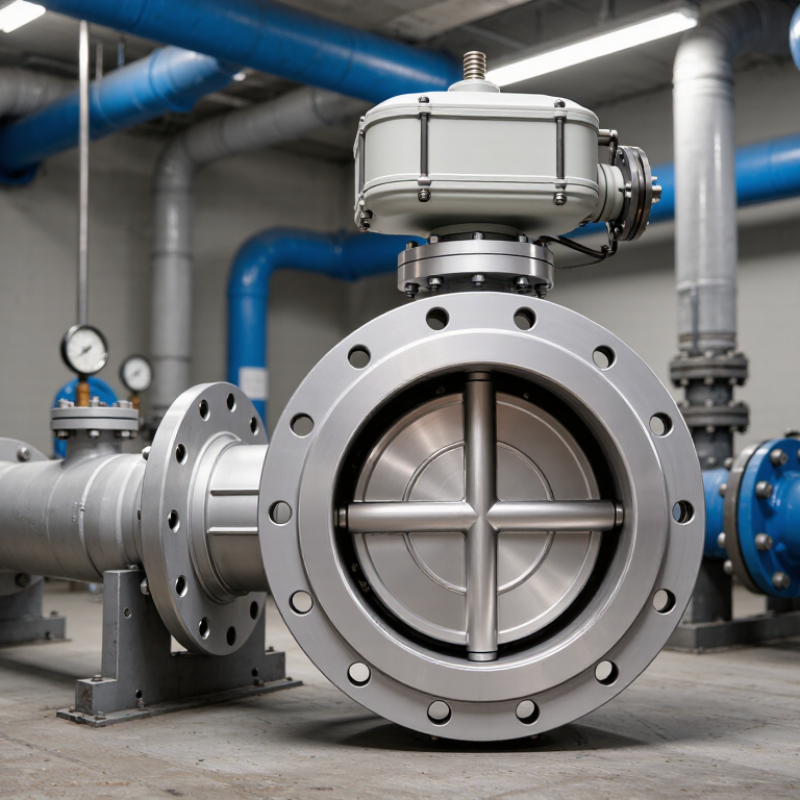
| Space and installation | Available space, pipe layout, and support requirements can affect installation cost and feasibility. | The quarter-turn design is generally compact and lighter than many gate or globe valve arrangements, particularly in larger pipe sizes. | Consider a butterfly valve where a short face-to-face dimension and a compact installation are useful. Check clearance for the disc, shaft, actuator, and nearby pipework. |
| Flow and pressure drop | The valve and its disc affect flow even when the valve is open. | The disc remains in the flow path, so a butterfly valve does not provide the same unobstructed bore as a fully open full-port ball valve. Pressure loss varies with valve design, size, and flow conditions. | Compare flow coefficients and calculate pressure drop at the required flow rate rather than assuming all butterfly valves have the same flow performance. |
| Shutoff and leakage requirements | Required isolation performance depends on the process and the applicable specification or standard. | Resilient-seated designs can provide tight shutoff within their rated service conditions. Metal-seated designs are available for different temperature, durability, or leakage requirements. | Specify the required leakage class or seat performance, direction of pressure, and operating conditions. Confirm that the selected design has suitable ratings. |
| Temperature and pressure | Pressure and temperature limits depend on the body, disc, shaft, seat, and construction. | Concentric resilient-seated, double-offset, and triple-offset designs have different operating envelopes. Metal-seated designs are commonly considered for services beyond the limits of some resilient seats. | Check the manufacturer’s pressure-temperature ratings for the complete valve assembly, including the seat and end connection. Do not rely on valve type alone to establish suitability. |
| Fluid and material compatibility | Corrosion, erosion, abrasion, and chemical attack can shorten service life or affect safe operation. | Body, disc, shaft, and seat materials are available in different combinations, but compatibility is specific to the fluid and operating conditions. | Verify material compatibility for the process fluid, concentration, temperature, and any cleaning chemicals. Consider solids content and erosion risk where relevant. |
| Flow control and throttling | Some applications require only open-or-closed isolation, while others need stable flow adjustment. | Butterfly valves can be used for throttling when the design and operating range are appropriate. Flow characteristics are nonlinear, and prolonged operation at certain openings can cause noise, vibration, or wear. | For modulating service, confirm the valve’s control characteristics and allowable operating range. Use a suitably sized valve and actuator, and assess cavitation or noise where applicable. |
| Operation and actuation | Operating frequency, available power, and required response time determine how the valve should be operated. | The quarter-turn mechanism can be operated with a lever, gearbox, or powered actuator. Larger valves and higher differential pressures may require more operating torque. | Determine required torque across the full operating conditions. Select manual or automated operation based on access, cycle frequency, fail position, and control-system requirements. |
| Pipe connection and service access | Connection type and maintenance access affect fit, alignment, and future replacement or servicing. | Butterfly valves are available in wafer, lug, and flanged configurations, among others. The suitable style depends on the piping arrangement and service requirements. | Confirm pipe flange standards, pressure class, installation orientation, and whether the line must remain supported when one side is disconnected. Follow the valve’s installation instructions. |
| Typical application | Application conditions help determine whether the compact design and flow-control behavior are a good fit. | Butterfly valves are commonly used in water and wastewater systems, HVAC, and many industrial process lines where their ratings and materials are suitable. | Match the valve to the actual fluid, pressure, temperature, flow rate, cycling, and shutoff requirements. Use another valve design if those requirements are outside the butterfly valve’s rated capability. |