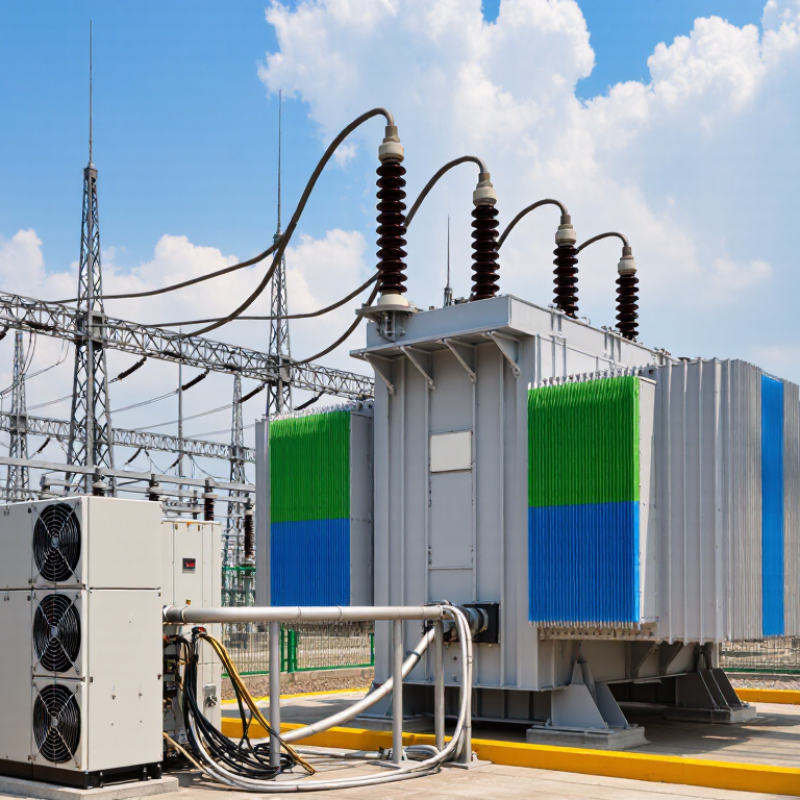
| Voltage matching | Steps the inverter’s AC voltage up or down to suit a load, distribution system, or grid connection. | Helps connect equipment operating at different voltage levels. | The transformer ratio and ratings must match the inverter output and the connected system. |
| Galvanic isolation | Separates the inverter-side winding electrically from the load- or grid-side winding while transferring energy magnetically. | Can help meet system isolation requirements and reduce the transfer of certain common-mode disturbances. | Isolation does not replace proper grounding, protective devices, or compliance with applicable electrical codes. |
| Grounding and system configuration | May provide a suitable winding connection, such as a neutral point, depending on the transformer design. | Can support the grounding arrangement required by a particular installation. | Grounding and neutral arrangements must be designed for the complete system, not selected from the transformer alone. |
| Waveform and harmonics | Transfers AC power from the inverter to the connected system; its impedance and magnetic design affect how it responds to inverter waveforms. | A correctly specified transformer can operate with the inverter’s output and the system’s power-quality requirements. | A transformer is not a substitute for an output filter; harmonic performance depends on the inverter, transformer, and system together. |
| Fault and transient behavior | Its winding impedance influences voltage drop and fault-current behavior between the inverter and the connected circuit. | Can contribute to system coordination when protection is designed around the complete installation. | Protection settings must account for the inverter’s current limits and the transformer’s impedance. |
| Common applications | Used in some solar, battery, industrial-drive, and grid-connected power-conversion systems. | Provides isolation or voltage conversion where the system design calls for it. | Not every inverter requires a transformer; transformerless designs are also used where permitted by the application and regulations. |
| Transformer type and frequency | May be a line-frequency transformer on the AC output or a high-frequency transformer within an isolated inverter topology. | Allows the transformer design to suit the inverter architecture and power-conversion stage. | The transformer must be designed for its operating frequency, waveform, voltage, current, and thermal duty. |
| Efficiency and size | Adds a magnetic conversion stage to the power system. | Can provide useful isolation or voltage adaptation when those functions are needed. | Adds weight, volume, cost, and losses, so the need for a transformer should be assessed in the overall design. |