Why Is Stainless Welding So Difficult?
Stainless Welding looks clean from a distance, yet the weld pool can hide serious problems. Heat travels unevenly through stainless steel, and small changes in travel speed can alter penetration, color, and corrosion resistance. A bright bead is not automatically a sound bead. That assumption causes trouble.
John C. Lippold, a recognized authority in stainless steel metallurgy, has stated, “Stainless steels are not necessarily easy to weld.” His warning deserves attention on every fabrication floor. Stainless Welding demands control over heat input, shielding gas, joint fit-up, electrode selection, and surface cleanliness. A fingerprint, oil film, or embedded carbon-steel particle may become a weak point later. The mistake may remain invisible until service conditions expose it.
The material remembers heat.
Unlike mild steel, many stainless grades can suffer from distortion, sensitization, hot cracking, or reduced corrosion resistance. Austenitic, ferritic, martensitic, and duplex stainless steels also respond differently. One procedure cannot safely cover every grade. Experienced welders check the material certificate, confirm the grade, and record essential parameters before striking an arc. They also inspect the root, not only the attractive face.
Even careful work can fail when assumptions replace measurement. That is the uncomfortable lesson. A qualified procedure, suitable ventilation, calibrated equipment, and documented inspection improve reliability. Still, welding is influenced by fit-up, environment, operator technique, and repair history. Understanding these variables makes Stainless Welding more predictable, but never completely automatic.
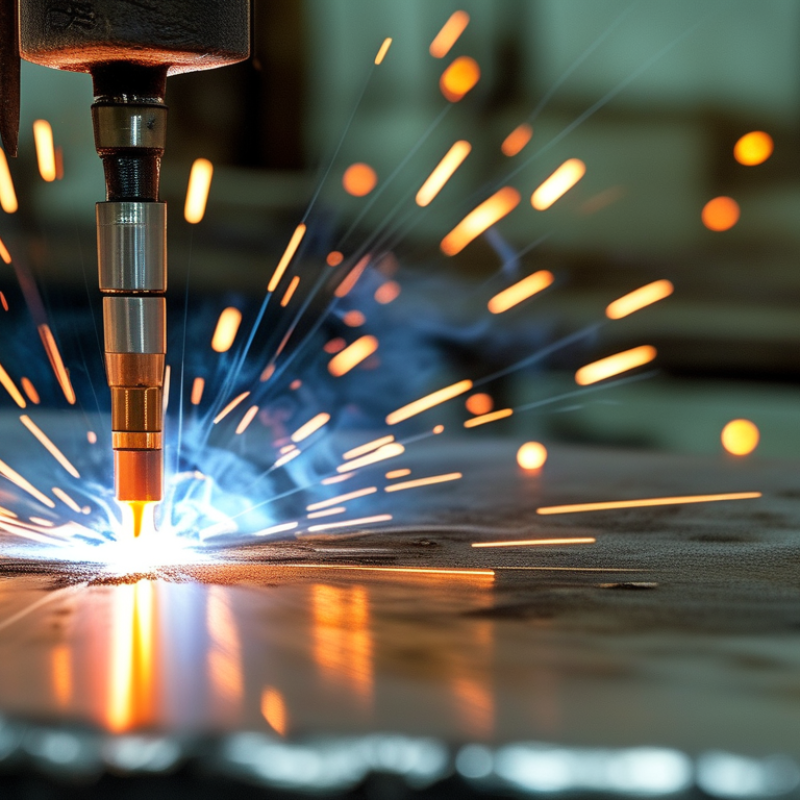
How 10.5% Chromium Creates Stainless Steel’s Welding Challenges
Why Is Stainless Welding So Difficult?
Stainless steel begins its corrosion resistance with a thin chromium-rich oxide film. At least 10.5% chromium is needed to create this protective behavior. That number looks small, but it changes welding conditions. During welding, intense heat breaks the film and rearranges the metal’s structure. Air restores the surface later, yet the hot zone remains vulnerable. That is where many failures begin.
The heat-affected zone can stay between roughly 450 and 850°C during welding. Within this range, chromium may combine with carbon near grain boundaries. The nearby steel then has less chromium available for corrosion protection. This condition, called sensitization, can cause corrosion along grain boundaries. Heat input matters. Slow travel, excessive amperage, or repeated passes can widen the affected area. Stainless steel also expands more than carbon steel and conducts heat less efficiently. Distortion can appear beside an otherwise neat bead.
Reliable welding begins with control, not appearance. An experienced welder cleans oxide, oil, and carbon-steel residue before striking an arc. Suitable filler selection, controlled interpass temperature, and shielding gas protect the joint’s chemistry. Back purging is often essential for root protection, especially on pipe and thin sections. After welding, inspection should consider discoloration, penetration, and the service environment. I have seen bright welds fail early because surface color was mistaken for quality. That mistake is easy to repeat.
How 304’s 17.2 µm/m·K Expansion Causes Welding Distortion
Why Is Stainless Welding So Difficult?
304 stainless steel is difficult to weld because heat does not remain where the arc places it. Its coefficient of thermal expansion reaches about 17.2 µm/m·K between room temperature and 100°C, according to ASM Handbook material data. Carbon steel is closer to 12 µm/m·K. That difference matters.
Consider a one-metre 304 plate heated by 600°C. If it could expand freely, its length would increase by roughly 10.3 millimetres. Clamps prevent much of that movement. The metal then stores stress, bends after release, or pulls the joint out of alignment. AWS Welding Handbook guidance also identifies heat input, restraint, and welding sequence as major distortion controls.
Heat moves slowly through 304. Its thermal conductivity is approximately 16.2 W/m·K, based on engineering data compiled in ASM Handbook, Volume 6A. A narrow weld pool can therefore create a steep temperature gradient. The weld contracts first. The cooler plate resists it.
In practice, I have seen a flat panel lift slightly after the final tack, even when the fit-up looked accurate. Shorter weld segments, balanced sequencing, and controlled interpass temperatures usually help. Lower current may help too, but excessive speed can create poor fusion. That trade-off is easy to underestimate.
Do not trust clamps alone. Measure the gap before welding and again after cooling. A simple 10.3 millimetre expansion estimate can expose a serious distortion risk before the first arc. Real assemblies are less predictable than calculations. That is where judgment still matters.
Why Heat Input and Interpass Temperature Control Phase Balance
Stainless welding is difficult because heat changes more than bead shape. It changes the weld metal’s phase balance. In austenitic grades, excessive heat input can extend time in the 500–850°C sensitization range, identified in ASM Handbook, Volume 6A. Chromium carbides may form at grain boundaries, reducing corrosion resistance. The weld can look smooth and still fail a corrosion test.
Duplex stainless steel is even less forgiving. International Institute of Welding guidance commonly targets roughly 30–70% ferrite in the weld zone. Too much heat promotes austenite and can lower strength. Too little heat, or rapid cooling, can leave excessive ferrite and reduce toughness. A practical control point is interpass temperature. Many industry procedures limit it to about 150°C for duplex welding, consistent with guidance used in ISO 17781 qualification practices. Measure the actual joint, not the nearby plate.
Small details matter. A long arc, wide weave, or oversized electrode raises heat input. A simple heat-input estimate uses voltage, current, travel speed, and process efficiency. Travel too slowly, and the weld pool becomes wide and sluggish. Keep passes narrow. Let the surface cool between passes.
The weak point is human judgment. “It feels cool enough” is not reliable. A calibrated temperature crayon or contact thermometer gives better evidence. I would still question a perfect-looking weld if the log misses amperage, voltage, or interpass readings. Phase balance is controlled by records, not appearance.