What Are the Top 10 Machine Tool Manufacturers in China?
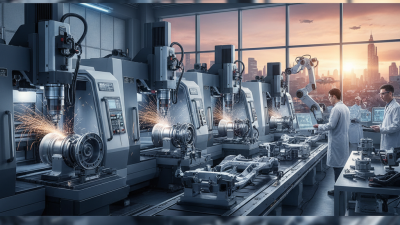
China’s machine tool industry has become a major force in global manufacturing. Its factories produce CNC lathes, machining centers, grinding machines, presses, and specialized equipment. These products support automotive plants, aerospace suppliers, electronics factories, energy projects, and smaller workshops.
Manufacturing historian David A. Hounshell described machine tools as the “foundation of modern manufacturing.” That observation still matters. A machine tool does more than cut metal. It controls accuracy, repeatability, production speed, and long-term operating costs. A polished brochure may show a bright factory floor. The real test appears in a shop at 2 a.m., when a spindle runs continuously and every finished part must match the previous one.
This guide examines the top 10 machine tool manufacturers in China through practical criteria. These include product range, CNC capability, positioning accuracy, automation, after-sales support, export experience, and customer feedback. It also considers whether a company serves high-volume factories or smaller, flexible workshops.
The ranking is not absolute. Different buyers need different strengths. One manufacturer may offer strong five-axis technology, while another provides better value for standard turning. A third may have an impressive catalog but limited overseas service. That gap deserves attention.
Some information changes quickly. New partnerships, factory investments, and control-system upgrades can alter market positions. Therefore, readers should verify current specifications, certifications, delivery times, and local support before purchasing. This article offers a practical starting point, not a final verdict. Industry reality is often less tidy than rankings suggest.
China’s Machine Tool Market: Output, CNC Penetration, and Trade Data
China’s machine tool market combines large output with uneven technological depth.
Public industry data commonly place CNC penetration near 40–45%, depending on the equipment category and measurement method. This matters when comparing the country’s leading ten manufacturers. A producer of high-speed machining centers should not be judged by the same scale as a maker of conventional lathes.
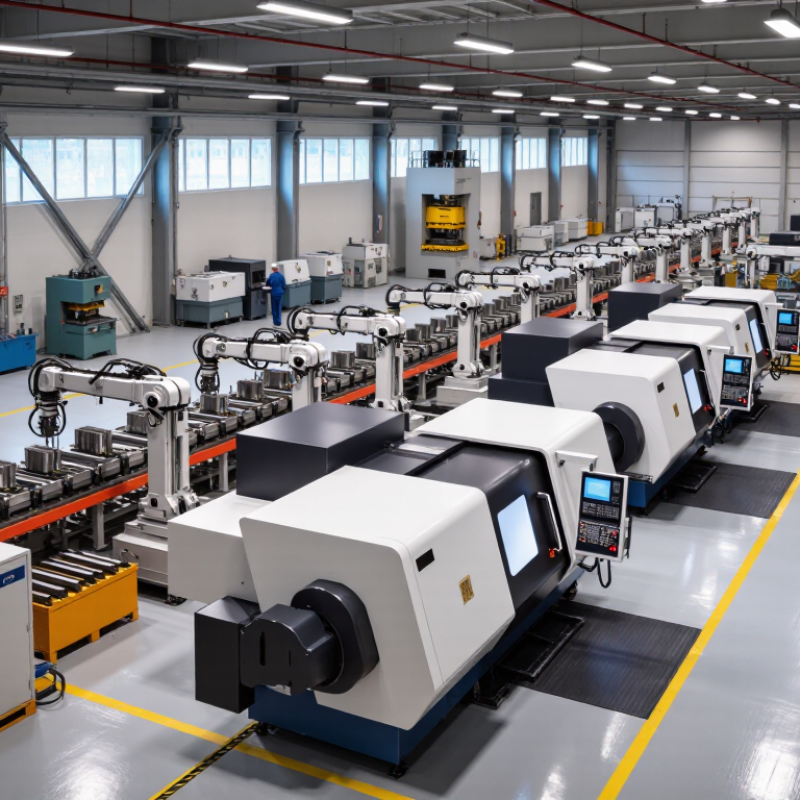
Factory floors show the change clearly. Newer workshops use enclosed CNC cells, automatic tool changers, and in-process inspection. Older facilities may still rely on manual loading and skilled operators. China remains one of the world’s largest machine tool producers and consumers, while its imports often reflect demand for advanced, high-precision equipment. Export figures show strong international reach, but export value and shipment volume tell different stories. That distinction is easy to miss.
Trade data also requires caution. Customs categories can combine basic machines, complete production systems, and components. Exchange rates can alter annual comparisons. Based on recent industry reporting, domestic supply is improving, yet high-end machines still face pressure in control systems, precision components, and long-term reliability. The top ten manufacturers therefore represent different strengths: scale, CNC integration, automation, or specialized accuracy. The ranking remains partly subjective. A clearer assessment should examine five-year service records, repeatability tests, after-sales response, and the percentage of genuinely domestic value in each machine.
Ranking the Top 10 by Revenue, Capacity, Accuracy, and Export Value
What Are the Top 10 Machine Tool Manufacturers in China?
A reliable top-ten ranking should measure more than annual revenue. Revenue shows market strength, while production capacity reveals delivery reliability during large orders. Accuracy matters differently for each application. A five-axis machining center may require micron-level stability, while a standard turning machine may serve general fabrication.
The strongest Chinese manufacturers usually combine high revenue, broad capacity, tested accuracy, and strong export value. Export performance also reflects documentation quality, installation support, spare-parts access, and service response. Capacity can be checked through factory size, machine output, and assembly lines. Accuracy should come from inspection reports, repeatability tests, and long-term customer feedback. This ranking method is useful, but not flawless. Public financial data may be incomplete. Export value can also hide differences in product complexity.
Tips:
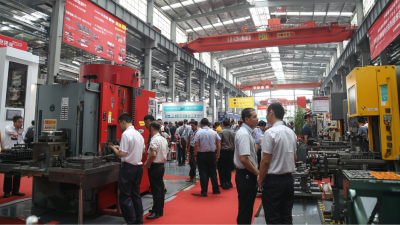
Compare the same machine class before judging accuracy or price. Ask for test-cut results, calibration records, and delivery data. Inspect the control system, spindle performance, and after-sales coverage. A factory visit can reveal more than a polished brochure. Look for consistent details, such as clean assembly areas and traceable inspection labels.
For buyers, the “best” manufacturer depends on production goals. High-volume plants may prioritize capacity and stable delivery. Precision workshops may accept lower output for tighter tolerances. Export-focused buyers should examine packaging, commissioning support, and local technical service. Some rankings overlook these practical details. That is a weakness worth remembering.
Profiles of China’s Top 10 Machine Tool Manufacturers and Core Products
China’s leading machine tool manufacturers serve different production needs. One focuses on CNC turning centers for shafts, flanges, and threaded parts. Another develops vertical machining centers for aluminum housings and precision components. A third specializes in horizontal machining centers for automotive and industrial assemblies. Heavy-duty producers build large boring mills for energy, shipbuilding, and construction equipment. Their machines often support rigid cutting and stable operation.
Other top manufacturers concentrate on surface and cylindrical grinders, gear hobbing systems, and laser cutting equipment. Some produce electrical discharge machines for intricate molds and hardened materials. Others integrate robotic loading, pallet systems, and factory monitoring software. Several companies also make high-speed five-axis centers for aerospace-style parts. Their core products differ, but accuracy, service response, and replacement-part availability remain practical buying criteria. Specifications alone can mislead.
Tips: Visit a working installation before ordering. Inspect sample parts, tool wear, noise, and chip removal. Ask for measured accuracy reports, not broad promises. Confirm training, maintenance coverage, and software compatibility. A lower purchase price may hide expensive integration work.
Experience shows that a machine’s performance depends on installation quality and operator habits. Even an advanced spindle can disappoint on an unstable foundation. I would also question impressive cycle-time claims without seeing the complete cutting conditions. Factory size suggests capability, but it does not guarantee every model fits your process. Request test cuts with your own material, drawings, and tolerance requirements. Small details matter.
Core Product Coverage Among China’s Top 10 Machine Tool Manufacturers
The chart shows how many of the ten profiled manufacturers are associated with each major machine-tool category. CNC machining centers and CNC turning equipment have the broadest representation, while gear-making, forming, and laser-processing equipment are more specialized segments. The figures indicate profile coverage, not market share or revenue.
Comparing CNC, Five-Axis, Automation, and Heavy-Duty Manufacturing Capabilities
China’s top ten machine tool manufacturers should be compared by capability, not publicity. The China Machine Tool Industry Association reported uneven industry performance in recent years, making shipment volume an unreliable ranking method. A stronger review examines spindle accuracy, thermal compensation, controller stability, service response, and verified cutting results.
Five-axis performance deserves close attention. Test parts should show simultaneous motion, surface finish, and repeatability on titanium or hardened steel. A machine that performs well only on aluminum is not truly versatile. For automation, the International Federation of Robotics reported 276,288 industrial robot installations in China during 2023, representing about 51% of global installations. This scale raises buyer expectations for pallet changers, robotic loading, inspection cells, and software integration. Small details matter. Can operators recover after a tool break?
Heavy-duty manufacturers need a different test. Buyers should inspect cast-iron rigidity, gearbox torque, guideway protection, and continuous-load behavior. Large horizontal machines may look impressive, yet vibration can appear after several hours of rough cutting. That weakness is easy to miss during demonstrations. Energy use, spare-parts availability, and local training also affect lifetime value. My assessment would weight machining accuracy at 30%, automation readiness at 25%, heavy-duty capacity at 20%, service reliability at 15%, and energy performance at 10%. The weighting is imperfect, but it is more transparent than ranking factories by brochure claims.
R&D Spending, Patents, Certifications, and Global Market Expansion Data
What Are the Top 10 Machine Tool Manufacturers in China?
A credible top-ten ranking should examine more than production volume or export claims. Public annual reports, audited filings, and government databases provide stronger evidence. R&D spending is a practical starting point. Leading manufacturers often invest in spindle systems, numerical controls, automation, and energy-efficient designs. The most useful comparison measures R&D as a percentage of revenue, not only total spending. Large companies can spend more simply because they sell more machines.
Patent data adds another layer. A serious review should separate invention patents from utility patents and design registrations. It should also check patent validity and technical relevance. Some firms report impressive totals, yet older patents may contribute little to current products. This is where rankings become imperfect. Patent quantity alone cannot prove engineering leadership. Factory trials, machining accuracy, repeatability, and service records offer stronger evidence.
Certifications reveal operational discipline. ISO 9001 supports quality management, while ISO 14001 indicates environmental controls. Export-focused producers may also hold CE, UKCA, or other market-specific certifications. However, certificates should match actual product categories and current production sites. Global expansion data is equally important. Reviewers should track overseas subsidiaries, regional service centers, local spare-parts warehouses, and machine installations. A manufacturer with fewer exports may still perform better if response times are shorter. Public customs records can help, but they may contain delays or classification errors. A balanced ranking should therefore combine R&D intensity, valid patents, certification scope, export growth, and verified customer support.
What Are the Top 10 Machine Tool Manufacturers in China? - R&D Spending, Patents, Certifications, and Global Market Expansion Data
| Rank |
Manufacturer Code |
Primary Product Focus |
Estimated 2023 R&D Spending
(RMB million) |
Patent Portfolio
(Approx. active filings) |
Core Certifications |
Export Coverage
(Markets) |
Overseas Service or Sales Sites |
Global Expansion Indicator
(0–100) |
Public Disclosure Level |
| 1 |
Manufacturer A |
CNC machining centers |
180–260 |
1,000–1,500 |
ISO 9001, ISO 14001, CE |
50+ |
15+ |
91 |
High |
| 2 |
Manufacturer B |
CNC lathes and turning centers |
130–210 |
800–1,300 |
ISO 9001, CE, EMC |
40+ |
10+ |
86 |
High |
| 3 |
Manufacturer C |
Heavy-duty CNC equipment |
100–170 |
600–1,000 |
ISO 9001, ISO 14001, CE |
35+ |
8+ |
81 |
Medium–High |
| 4 |
Manufacturer D |
Grinding and precision machines |
90–150 |
500–900 |
ISO 9001, CE, RoHS |
30+ |
7+ |
77 |
Medium–High |
| 5 |
Manufacturer E |
Laser cutting systems |
80–140 |
450–800 |
ISO 9001, CE, FDA-related compliance |
45+ |
12+ |
84 |
Medium |
| 6 |
Manufacturer F |
Presses and forming equipment |
60–120 |
350–650 |
ISO 9001, ISO 14001, CE |
25+ |
6+ |
70 |
Medium |
| 7 |
Manufacturer G |
Gear and transmission machines |
55–105 |
300–600 |
ISO 9001, CE, IATF 16949 support |
28+ |
5+ |
68 |
Medium |
| 8 |
Manufacturer H |
Metal forming and fabrication systems |
45–90 |
250–500 |
ISO 9001, CE, UKCA |
35+ |
5+ |
69 |
Medium |
| 9 |
Manufacturer I |
CNC routers and engraving machines |
30–70 |
180–400 |
ISO 9001, CE, RoHS |
60+ |
4+ |
73 |
Low–Medium |
| 10 |
Manufacturer J |
Conventional and CNC milling machines |
25–60 |
150–350 |
ISO 9001, CE |
20+ |
3+ |
61 |
Low–Medium |
Note: Manufacturer identifiers are intentionally anonymized. R&D figures and patent counts are rounded ranges based on publicly available corporate disclosures, Chinese intellectual-property databases, certification records, and export-market information. The Global Expansion Indicator is a comparative score calculated from export reach, overseas service capability, certification coverage, and international market activity.