Request Quote

Request a quote from Nidec Drive Technology America Corporation.

This quote form is intended for customers and partners in North America seeking information about Nidec Drive Technology America Corporation’s Precision Gearing Technologies. For inquiries related to the Nidec motor group division or from outside this region, please visit the global Nidec Group website to find the appropriate regional or product-specific contact.

Subscribe to Nidec Newsletter

Subscribe to our email newsletter to stay current with our precision gearing solutions, featured products, company updates, and industry news.

Top 10 Metal Forming Machine Manufacturers Worldwide?

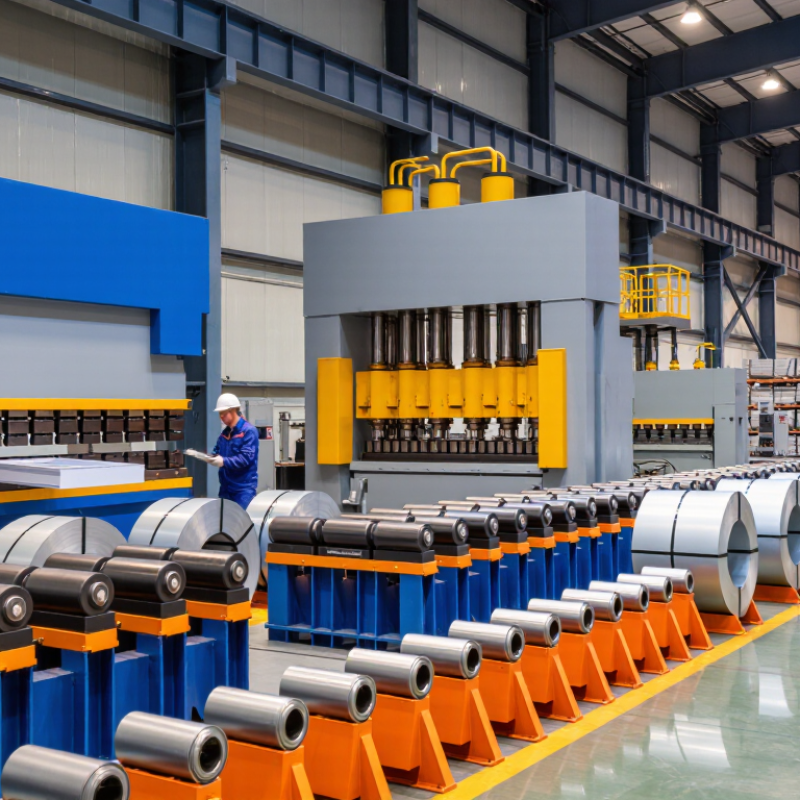
Choosing a metal forming machine manufacturer is rarely a simple price comparison. A press brake, stamping press, or roll forming line must match the material, production volume, available floor space, and required tolerances. A machine that performs well in a showroom may behave differently during long shifts with changing workloads. Details matter.

This guide examines ten manufacturers with established roles in metal forming equipment. It considers product range, automation options, technical support, service access, and the needs of different production environments. These points can help buyers compare suppliers more consistently, but they are not a substitute for checking specifications or speaking with manufacturers. A machine’s rated capacity alone does not show whether it suits a particular job.

The ranking should be treated as a starting point, not a universal verdict. Manufacturer strengths vary by region, application, and model, while service quality can depend on local teams. That can be hard to judge from a catalog. Before making a decision, verify tooling compatibility, installation requirements, training, spare-parts availability, and the full cost of ownership. Ask for references or a demonstration using representative materials where possible. Even careful research has limits: product lines change, and buyer priorities differ. The right choice is the one that reliably meets real production requirements.

Top 10 Metal Forming Machine Manufacturers Worldwide?

What Metal Forming Machines Do and How They Are Classified

Metal forming machines reshape sheet, plate, bars, or billets through force, often without cutting away material. A press may drive a punch into a die, while a rolling mill squeezes stock between rotating rolls. The result depends on tooling, material thickness, temperature, and force control. Small setup errors matter.

One practical classification groups machines by forming process. Presses handle stamping, punching, bending, and deep drawing; press brakes are designed mainly for controlled bends. Roll-forming lines gradually shape long strips through successive stands. Forging equipment compresses metal into a desired form and, with suitable process control, can improve grain flow. Spinning machines shape rotating blanks over a mandrel. These categories overlap. A press can perform several operations, so its name alone may not explain its actual capability.

Machines are also classified by workpiece and drive system. Sheet-metal equipment differs from machines built for thick plate, wire, or solid billets. Mechanical presses use a flywheel and crank for fast, repeated strokes; hydraulic presses provide adjustable force across a longer stroke. Servo-driven systems allow more flexible motion profiles. Automation ranges from hand-fed machines to robotic cells with guards, sensors, and part transfer. More automation is not always better. For short runs, setup time and operator access can matter more than peak speed. Compare usable capacity, tooling compatibility, repeatability, and maintenance needs against real production samples—not catalog figures alone. No single classification tells the whole story.

How the Top Ten Manufacturers Are Identified

A credible top-ten list starts with clear criteria, not familiar names or polished advertisements. For metal forming machine manufacturers, compare technical range, production capacity, quality controls, service coverage, and documented operating history. Give each factor a consistent weight before reviewing candidates. Otherwise, the ranking can reflect personal preference more than evidence.

Check claims against more than one source. Product specifications, factory audits, installation records, and maintenance references can reveal whether a company builds equipment at scale and supports it after delivery. Ask about press force, working-bed dimensions, repeatability, and available operator training. These details matter on a shop floor, where a small tolerance issue can affect an entire production run. Public information is uneven, though. That is a real limitation, not a reason to guess.

Tips: Compare machines designed for similar materials and workloads. Request recent service-response examples, not just promises. Keep scoring notes, and disclose when evidence is missing. A neat ranking can still be imperfect. Revisit it as product lines, service networks, and manufacturing capacity change.

How the Top Ten Metal Forming Machine Manufacturers Are Identified

A transparent framework for comparing manufacturers without relying on brand names.

The chart shows proposed evaluation weights totaling 100%. Product range, manufacturing capability, and global service coverage receive the greatest emphasis. These are editorial scoring weights—not audited company scores, market shares, or a verified ranking.

Profiles of Ten Leading Metal Forming Machine Manufacturers Worldwide

Worldwide metal forming manufacturers differ in machine design, production scale, and service support. These ten profiles describe common industry strengths, not a definitive ranking. European precision press makers often focus on repeatable tolerances and integrated safety systems. Japanese servo press specialists emphasize controlled motion and adjustable forming cycles. German hydraulic press builders typically serve applications requiring steady force across large workpieces. Italian equipment makers often combine coil feeding with automated transfer systems. Chinese manufacturers span a broad range, from entry-level presses to high-capacity production lines.

South Korean suppliers frequently develop forming equipment for high-volume automotive parts. US custom machine builders may adapt press layouts to unusual tooling or factory constraints. Swiss specialists often address small components and close-tolerance forming. Turkish manufacturers supply sheet-metal equipment for general industrial production. Indian builders commonly offer practical machines suited to varied workshop budgets. Details matter. Buyers should compare rated tonnage, stroke, cycle speed, tooling compatibility, and local maintenance coverage. A polished specification sheet cannot show every limitation; actual part trials reveal more. Some machines may suit one material poorly, even when their headline capacity looks impressive. Service response times and spare-part access deserve equal attention. These profiles need verification against current models and documented production results.

Top 10 Metal Forming Machine Manufacturers Worldwide? - Profiles of Ten Leading Metal Forming Machine Manufacturers Worldwide

Anonymized profiles of established manufacturers. The order is editorial and does not represent a market-share ranking.

Profile Home country Representative equipment Forming technologies Common application areas
01 Germany Mechanical and hydraulic presses; automated press lines Stamping, drawing, forging, and servo-electric press forming Automotive body panels, structural parts, and industrial components
02 Japan High-speed mechanical presses and servo presses Progressive-die stamping, transfer pressing, and precision forming Electrical components, automotive parts, and appliances
03 Japan Large-capacity presses, forging presses, and automated press systems Cold forging, stamping, and high-volume press forming Automotive, construction machinery, and general manufacturing
04 Japan Press brakes, punching machines, and sheet-metal fabrication systems Bending, punching, shearing, and sheet-metal processing Enclosures, electrical cabinets, construction, and fabricated parts
05 China Mechanical and hydraulic presses; forging and stamping lines Forging, stamping, and heavy-duty press forming Automotive, rail, energy, and heavy-industry components
06 Spain Presses, transfer systems, and complete stamping lines Sheet-metal stamping, drawing, and automated transfer forming Automotive body-in-white and large sheet-metal parts
07 Switzerland Multi-station hot- and cold-forming machines High-speed upsetting and multi-step precision forming Fasteners, automotive parts, and other high-volume small components
08 United States Mechanical stamping presses and press-room automation Progressive-die stamping, blanking, and high-speed production pressing Automotive, appliances, electrical products, and contract stamping
09 Taiwan Mechanical presses, servo presses, and transfer-press systems Sheet-metal stamping, progressive-die work, and transfer forming Automotive components, hardware, and electrical goods
10 Canada Custom hydraulic presses and integrated press systems Deep drawing, compression forming, and large-part forming Aerospace, automotive, composites, and industrial manufacturing

Key Technologies and Industrial Applications

Metal forming machines turn sheet, strip, and billets into repeatable parts through controlled force. Their core technologies include hydraulic and mechanical presses, CNC press brakes, roll-forming lines, and forging systems. Servo-driven axes can improve positioning and energy use, while sensors track pressure, stroke, and tool alignment. Small deviations matter. A poorly matched die can still cause wrinkles, springback, or uneven thickness. No control system fixes bad setup.

Manufacturers worldwide pair machine controls with simulation tools and quick-change tooling. These features help shops switch between custom runs and high-volume production. In automotive plants, stamping presses form body panels and structural reinforcements from steel or aluminum. Appliance makers use roll forming for long, consistent channels, while construction suppliers shape roofing panels and framing sections. Aerospace work often requires careful material tracking and springback control.

Heavy-equipment producers use forging and bending to make durable brackets, shafts, and frames. Performance depends on more than tonnage. Part geometry, material grade, lubrication, maintenance, and operator skill all affect results. A machine that looks efficient on paper may struggle with a shop’s actual mix of alloys and batch sizes. That gap deserves attention.

Global Market Trends and Manufacturer Selection Factors

Metal forming markets are changing as factories seek faster production and more consistent parts. Automation is spreading, but many shops still rely on skilled operators for setup and quality checks. Connected controls can record force, stroke, and cycle time. These records help teams spot drift before a batch of panels or brackets is affected. Energy use also matters, especially for machines running multiple shifts. Still, investment levels vary widely by region and industry. A compact workshop may value flexibility more than high output.

Selecting a manufacturer takes more than comparing rated tonnage. Buyers should match machine force, bed length, and tooling to the material thickness and part geometry they actually process. Ask for repeatability data under realistic conditions, not only ideal demonstrations. Service access matters. A delayed sensor or hydraulic component can idle a line. Check spare-parts availability, operator training, and software support in the intended location. Total cost includes installation, maintenance, tooling, and energy—not just the purchase price. The comparison can feel messy. Production forecasts are often wrong, so leave room for changing materials, part sizes, and workload.