Request Quote

Request a quote from Nidec Drive Technology America Corporation.

This quote form is intended for customers and partners in North America seeking information about Nidec Drive Technology America Corporation’s Precision Gearing Technologies. For inquiries related to the Nidec motor group division or from outside this region, please visit the global Nidec Group website to find the appropriate regional or product-specific contact.

Subscribe to Nidec Newsletter

Subscribe to our email newsletter to stay current with our precision gearing solutions, featured products, company updates, and industry news.

Top 10 Precision Group Suppliers for Global Buyers

Selecting a precision group supplier is a practical decision with consequences on the production floor. A machined component may look flawless under bright inspection lights, yet fail when dimensions drift across repeated batches. Global buyers therefore need more than a polished catalogue. They need evidence of process control, technical communication, and reliable delivery.

Joseph M. Juran, a prominent quality-management expert whose methods influenced manufacturing, offered a useful principle: “Quality does not happen by accident. It must be planned.” For buyers, that means asking how suppliers verify tolerances, document inspections, manage material changes, and respond when a sample misses specification. Ask for specifics. A clear measurement report is more valuable than a broad promise of “high precision.” This guide examines ten precision group suppliers through practical criteria, including manufacturing capability, quality systems, responsiveness, and international service experience.

Supplier profiles and public claims can change. Verify current certifications, capacity, lead times, and product fit directly before making a sourcing decision. A low quoted price may not reflect the cost of delayed shipments or inconsistent parts. Nor does one factory visit tell the whole story. This comparison offers a starting point, not a substitute for due diligence. The details matter. And sometimes, the available information leaves questions unanswered; buyers should treat those gaps as reasons to investigate, not as proof of failure.

Top 10 Precision Group Suppliers for Global Buyers

What Precision Group Suppliers Produce and the Industries They Serve

Precision group suppliers produce components that must fit, move, seal, or carry loads within defined tolerances. Their work often includes CNC-milled housings, turned shafts, ground pins, brackets, and custom fixtures. Some suppliers also provide heat treatment, surface finishing, and assembly. Details matter. A drawing may specify a bore diameter, but the mating part and operating conditions matter too. Quality teams commonly use gauges, coordinate measuring machines, and inspection records to check dimensions and repeatability.

These components serve aerospace, medical equipment, automotive, robotics, electronics, and energy applications. A medical instrument may need smooth edges and consistent movement; a robotic joint may require accurately aligned holes.

Buyers should share material grades, expected volumes, surface requirements, and revision-controlled drawings. Clear communication helps suppliers quote realistic lead times and identify difficult features before production.

Still, inspection cannot fix an unclear design. Tolerances that are tighter than the application needs can add cost without improving performance. Suppliers also vary in equipment and process control, so buyers should review relevant capabilities and sample inspection documentation.

A small detail can change the result.

How to Evaluate Precision Group Suppliers for Global Sourcing

When evaluating precision group suppliers, start with the part, not the presentation. Send the same drawing, material specification, and tolerance stack to each candidate. Ask how they measure a 0.02 mm feature, how often gauges are calibrated, and whether inspection records link to individual batches. A capable supplier should explain the method, not just promise accuracy. Request sample reports and compare actual readings with your critical dimensions.

The ISO Survey 2022 recorded 1,265,216 ISO 9001 certificates worldwide. That scale shows how common quality certification is; it does not prove a supplier can hold your tolerances.

Check that the certificate covers the relevant site and processes. Then review nonconformance rates, corrective-action records, and change-control practices. Ask for recent examples, with sensitive customer details removed. A polished audit can still miss a weak handoff between machining and inspection. Worth checking twice.

For global sourcing, also map lead times, backup capacity, packaging, and who owns freight damage claims. The World Economic Forum’s Global Lighthouse Network reports highlight productivity and quality gains from connected manufacturing, but digital dashboards are not a substitute for traceable measurement data. Pilot a small order, inspect parts on arrival, and compare the supplier’s readings with your own. One test is not a trend; repeat it.

The Top 10 Precision Group Suppliers and Their Core Capabilities

Global buyers comparing ten precision-group supplier profiles should match processes to part geometry, material, and tolerance. CNC milling and turning suit complex housings; cylindrical grinding supports tight shaft fits. Precision casting creates near-net shapes, while forging strengthens load-bearing parts. Laser cutting and forming produce sheet-metal enclosures. Stamping supports repeatable, high-volume parts. Gear cutting serves motion systems. Precision molding handles detailed polymer components. Toolmaking supports dies and fixtures. Metrology providers verify dimensions with calibrated instruments and coordinate-measuring machines. Contract assemblers combine components and manage traceability.

Tolerances matter.

Capability claims need evidence: sample inspection reports, calibration records, process-control charts, and clear change procedures. Deloitte and The Manufacturing Institute estimated that U.S. manufacturing could need 3.8 million workers by 2033, with 1.9 million jobs potentially unfilled. This workforce pressure makes documented training and stable process ownership worth checking, not assuming.

A supplier may own advanced equipment yet lack consistent measurement routines. That gap can surface only after parts reach the buyer. Ask for recent first-article results and defect trends, then compare them with the drawing’s critical dimensions. A capability list can flatter a supplier; independent audits sometimes reveal limits.

Comparing Supplier Quality, Capacity, Compliance, and Lead Times

Top 10 Precision Group Suppliers for Global Buyers
Comparing Supplier Quality, Capacity, Compliance, and Lead Times

For global buyers, a supplier comparison should go beyond quoted price. Request recent inspection data, calibration records, and sample measurement reports. Check critical dimensions against the drawing, not just a general quality certificate. The ISO Survey 2023 recorded about 1.27 million valid ISO 9001 certificates worldwide. That shows broad adoption of quality systems, but certification alone does not prove consistent part accuracy. Numbers can mislead.

Capacity needs equally concrete evidence. Ask for current machine loading, available shifts, backup equipment, and monthly output for comparable parts. A supplier’s maximum capacity may not reflect its actual open capacity. For compliance, review material traceability, documented process controls, and relevant customer or industry requirements. Define lead time in writing, including approval, production, inspection, and shipping. ISM’s May 2024 Manufacturing PMI reported a supplier-deliveries index of 48.9; below 50 indicated generally faster deliveries in that survey. It is a broad U.S. benchmark, not a promise about any individual supplier. Compare quoted timelines with recent on-time delivery records and ask how delays are reported. Still, verify. A neat spreadsheet can hide weak assumptions, and I would revisit the ranking after a pilot order.

Top 10 Precision Group Suppliers for Global Buyers

Comparing supplier quality, capacity, compliance, and lead times

Higher scores indicate stronger performance; lead-time scores are scaled so that faster delivery earns a higher score. Supplier profiles and scores are illustrative, not verified supplier-specific data. Validate actual capabilities, certifications, and quoted lead times before sourcing decisions.

How to Verify and Select a Precision Group Supplier for Your Needs

A precision group supplier should be verified through evidence, not polished claims. Request recent inspection reports, material certificates, calibration records, and a sample first-article inspection. Check that measurements include tolerances, units, and instrument identification. A drawing marked “within spec” is not enough. Ask how the supplier handles nonconforming parts and whether corrective actions can be traced to a specific production lot.

McKinsey Global Institute’s 2020 supply-chain analysis estimates that disruptions lasting a month or longer occur about once every 3.7 years for the average company. That makes backup capacity and realistic lead-time data important selection criteria. Ask suppliers to show recent on-time delivery performance and explain how they manage machine downtime or material delays. Deloitte and MAPI’s 2024 Smart Manufacturing and Operations Survey found that 86% of respondents expect smart manufacturing to drive competitiveness within five years. For buyers, this supports checking whether digital inspection records are usable and consistently maintained, not just available during an audit.

Visit the production floor when possible. Watch an operator measure a part, review the control plan, and compare the recorded result with the drawing. Confirm that capacity claims match actual equipment, staffing, and shift patterns. No checklist catches everything. A minor point: even excellent documentation can hide a rushed process, so verify a real production run before committing to volume.

Top 10 Precision Group Suppliers for Global Buyers - How to Verify and Select a Precision Group Supplier for Your Needs

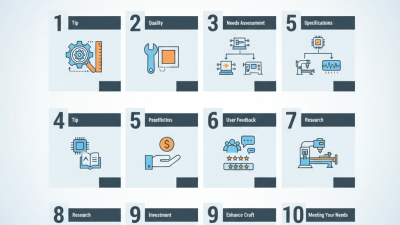
Supplier-selection checklist: The rows below are verification criteria, not a ranking of named companies. Confirm requirements against the part drawing, purchase specification, industry, and destination market.

No. Evaluation Area Evidence to Request How to Verify Selection Signal
01 Process and part fit Process list covering relevant operations, such as CNC milling, turning, grinding, sheet-metal work, or finishing; examples of comparable parts. Compare the supplier’s demonstrated processes and equipment with the part’s geometry, material, volume, and drawing requirements. The supplier can explain the proposed process route and identify any design, tooling, or inspection constraints before quoting.
02 Drawing and tolerance capability A drawing review, proposed inspection plan, and sample measurement report for comparable features. Check that the supplier understands GD&T callouts, datums, surface-finish requirements, and specified tolerances. Confirm acceptance limits from the drawing or purchase specification. Critical characteristics have defined measurement methods and documented acceptance criteria; no unsupported tolerance claims are used.
03 Quality-management system Current certificate, certificate scope, site address, issuing body, and relevant quality procedures. Verify certificate validity and scope with the issuing or accredited certification body. ISO 9001 covers quality-management-system requirements; sector-specific standards may apply where required. The certificate covers the actual manufacturing site and relevant activities, and the supplier can describe its corrective-action and audit processes.
04 Industry-specific requirements Applicable approvals and records for the intended sector, such as ISO 13485 for medical-device quality systems, IATF 16949 for automotive quality systems, or AS9100 for aviation, space, and defense quality systems. Confirm the standard, site, scope, validity, and any customer-specific requirements. Do not treat a general quality certificate as proof of product or regulatory approval. Required sector credentials are valid and relevant to the contracted work; regulatory responsibilities are clearly allocated.
05 Measurement and inspection resources Equipment list, calibration records, inspection procedures, and sample first-article or dimensional inspection reports. Review whether measurement equipment is suitable for the specified features and whether calibration records are current and traceable to recognized measurement standards. Inspection capability matches the part’s risk and tolerances, with results recorded against drawing characteristics.
06 Material and traceability Material certificates, supplier lot records, heat or batch identification where applicable, and procedures for maintaining traceability. Match material grade and condition to the specification. Check that records connect received material lots to production and shipment documentation. Material identity and required documentation can be traced through the production lot without gaps.
07 Production capacity and lead time Documented production schedule, available machine capacity, expected production and inspection stages, and stated lead-time assumptions. Ask the supplier to explain capacity constraints, subcontracted operations, tooling lead time, and how delivery performance is monitored. Quoted timing is supported by a realistic process plan and clear assumptions, rather than an unqualified delivery promise.
08 Prototype, first article, and process control Prototype or pilot plan, first-article inspection report, control plan where appropriate, and procedures for handling process changes. Agree on sample quantities, approval criteria, change notification, and production-release requirements before placing a production order. The supplier can demonstrate how production is validated and how changes to material, tooling, process, or site are controlled.
09 Subcontracting and supply-chain controls List of outsourced processes, subcontractor approval controls, and records for special processes when required by the specification. Identify who performs each operation and who is responsible for verification, documentation, and nonconformance management. Outsourced work is disclosed, controlled, and included in the agreed quality and traceability requirements.
10 Commercial, delivery, and risk review Itemized quotation, payment and warranty terms, packaging proposal, shipping terms, and a written response to identified project risks. Compare quotations on the same revision, material, tolerance, inspection, quantity, packaging, and delivery basis. Confirm shipping responsibilities and applicable import documentation. Price and delivery commitments are transparent, comparable, and consistent with the technical and quality requirements.