Request Quote

Request a quote from Nidec Drive Technology America Corporation.

This quote form is intended for customers and partners in North America seeking information about Nidec Drive Technology America Corporation’s Precision Gearing Technologies. For inquiries related to the Nidec motor group division or from outside this region, please visit the global Nidec Group website to find the appropriate regional or product-specific contact.

Subscribe to Nidec Newsletter

Subscribe to our email newsletter to stay current with our precision gearing solutions, featured products, company updates, and industry news.

What Is the Best Drive In Rack System for 2026?

A drive-in rack system can turn a wide warehouse floor into dense pallet storage. It can also make access slower if lane depth, forklift clearance, or product rotation are poorly matched. The right choice for 2026 depends on the work inside the building: pallet dimensions, daily throughput, inventory variety, and the trucks moving through each lane. Small details matter. A few centimeters of clearance can affect how confidently an operator enters a rack.

This guide compares drive in rack options by storage density, selectivity, durability, and operational fit. It also considers practical details buyers may overlook, such as upright protection, rail alignment, installation quality, and future changes in pallet mix. Drive-in storage often suits facilities handling many pallets of similar products, but it is not the best answer for every warehouse. That deserves a closer look.

A named industry expert’s quotation was not included in the supplied material, so attributing a quote here would risk misrepresenting someone’s words. Before publication, verify a suitable quotation with its original source and confirm the expert’s role in rack design or warehouse operations. The evaluation should be just as careful: compare load data, layout drawings, and site conditions rather than relying on a headline capacity figure. Practical evidence beats a confident sales claim.

What Is the Best Drive In Rack System for 2026?

What Is a Drive-In Rack System?

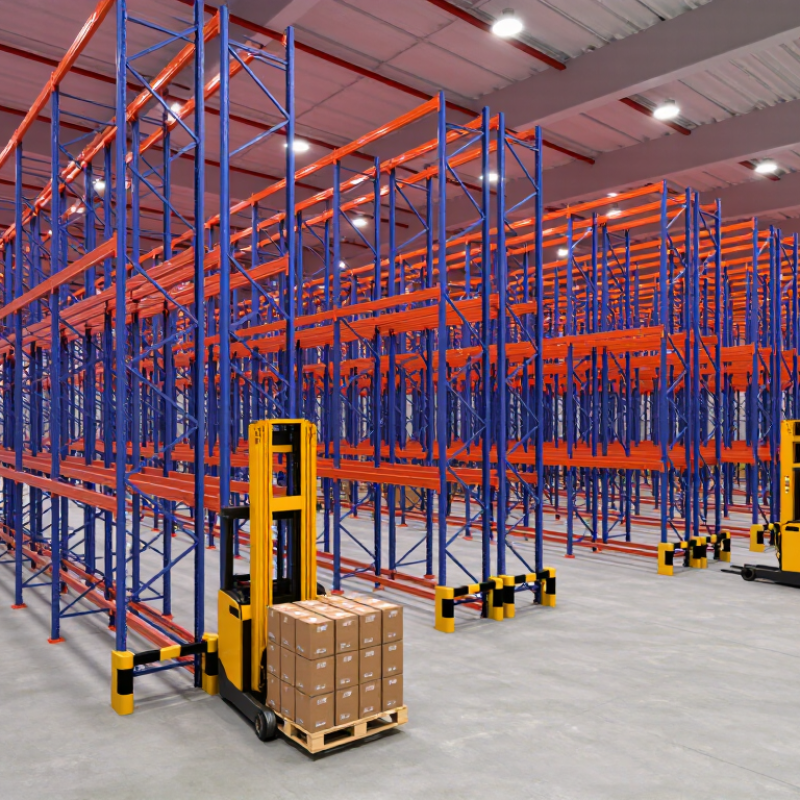
A drive-in rack system is a high-density pallet storage structure designed for forklifts to enter storage lanes. Pallets rest on support rails fitted along the lane sides, rather than on separate beams at every position. This arrangement reduces the number of aisles and uses warehouse floor space efficiently. Forklifts enter the lanes.

Because pallets share a lane, operators typically load and retrieve them using a last-in, first-out sequence. The system works best when many pallets hold the same product and stock rotation allows this order. It can be less suitable for mixed items that need frequent, independent access. In practice, the layout is rarely as tidy as a drawing suggests. Pallet dimensions, load weight, forklift turning space, ceiling height, and floor capacity all affect the design. A few inches can matter when a truck moves inside a narrow lane. Rack components should be checked regularly for impact damage, loose connections, and bent supports, with damaged areas assessed before use. A qualified storage professional can help confirm clearances and load requirements for the actual building.

How Drive-In Rack Systems Store and Retrieve Pallets

What Is the Best Drive-In Rack System for 2026?

How Drive-In Rack Systems Store and Retrieve Pallets

Drive-in racks store pallets several positions deep along supported rails. A forklift enters the lane to place or remove each pallet. This uses less aisle space than selective racking, but it requires careful traffic control. In a typical drive-in lane, the last pallet placed is the first one removed. That last-in, first-out flow suits goods stored in batches, especially when product rotation is not the main concern.

Retrieval takes a little planning. The forklift driver enters the correct lane, lifts the pallet clear of its rails, and backs out slowly. Upright guards and clear floor markings can help reduce impacts. Pallets should be consistent in size and in good condition; damaged boards or uneven loads can catch on the rails. A rack’s capacity depends on its design and installation, so verify load signs and have qualified professionals assess changes. The “best” system depends on pallet dimensions, handling equipment, and inventory flow.

Tips: Label each lane clearly, keep loads within rated limits, and train drivers to enter squarely. Check rails and uprights during routine inspections. Small alignment errors matter. I’d also review whether LIFO access fits actual picking needs; it can be less convenient than expected when stock changes frequently.

Which Warehouse Needs Suit Drive-In Racking?

What Is the Best Drive-In Rack System for 2026?
Which Warehouse Needs Suit Drive-In Racking?

Drive-in racking suits warehouses storing large quantities of a few similar products. It uses deep lanes, allowing forklifts to enter the rack structure and place pallets along rails. This can free up floor space when storage density matters more than direct access to every pallet. It works best when pallets have consistent dimensions and loads are stable. A warehouse with many fast-moving, mixed-SKU orders may find the reduced selectivity frustrating.

Tips: Check pallet sizes, forklift turning space, and lane depth before choosing a system. Plan clear inspection access, too. A dense layout can look efficient on paper, but daily loading patterns may expose awkward bottlenecks.

Drive-in racks generally support last-in, first-out access, so they suit inventory that can be rotated by lane. They may fit seasonal stock, bulk ingredients, or reserve inventory with predictable demand. However, fragile pallets, frequent batch changes, or strict first-in, first-out needs can complicate operations. Compare storage density with retrieval time, and test the proposed layout against real forklift routes. Small handling delays add up.

What Factors Determine the Best System for 2026?

The best drive-in rack system for 2026 depends on the loads, layout, and operating risks it must handle. Measure pallet width, depth, and loaded weight—not just the average. Check the tallest load against clearances and sprinkler arrangements. Then map how often each SKU moves. Drive-in racks suit dense storage of similar products, but forklifts enter the lanes, so frequent access to many different SKUs can slow picking and raise damage risk.

Budget for more than steel. A 2024 MHI Annual Industry Report found that 55% of surveyed supply-chain professionals planned to invest more than $1 million in supply-chain innovation. That figure is not a rack-buying forecast, but it shows why buyers should assess how storage fits wider plans for labor, data, and automation. Compare usable pallet positions, aisle needs, installation disruption, inspection access, and future expansion. Ask suppliers to model your actual pallet mix and forklift clearances. Test the assumptions.

Safety and adaptability matter. Confirm the design suits floor capacity, local seismic conditions, fire protection, and site-specific operating procedures. A low-cost layout can look efficient on paper. It may become awkward when inventory changes or damaged uprights restrict a lane. I would challenge any proposal that promises maximum density without showing retrieval time, maintenance access, and a realistic growth allowance. The right system is the one your team can load, inspect, and manage reliably.

How to Choose a Drive-In Rack Design for Your Operation?

A drive-in rack system can store many pallets in a compact footprint, but the right design depends on how your operation moves stock. It usually works best when products arrive and leave in larger, consistent batches. The trade-off is access: lanes typically follow last-in, first-out handling. That may not suit every inventory plan.

Start with your pallet dimensions, load weights, and forklift model. Measure the tallest load, including any uneven wrapping. Then map turning space, aisle width, ceiling height, and sprinkler clearance. Check the floor slab and confirm that the rack’s rated capacity matches the loads you actually handle. Small misses matter.

Look at daily activity, not only peak storage demand. If operators frequently need a pallet buried deep in a lane, retrieval can slow down and disturb nearby loads. Review lane depth against batch size, and consider separating products with different turnover rates. Ask a qualified rack professional to review the layout and loading conditions. A simple floor plan helps. If possible, test a proposed lane with your forklift and a representative pallet before installation. It may feel slower than expected. That is useful evidence, not a design failure.

What Is the Best Drive In Rack System for 2026? — How to Choose a Drive-In Rack Design for Your Operation?
A practical comparison of drive-in and drive-through rack design factors. Planning ranges are indicative; final dimensions and capacities must be verified by a qualified rack engineer.
Design Factor Typical Planning Range or Option Operational Effect Best Fit What to Verify Before Selection
Operating method Drive-in: one access side, usually LIFO. Drive-through: access from both ends, can support FIFO. Determines loading sequence, stock rotation, and the number of accessible faces. Drive-in for large batches of the same SKU; drive-through when product rotation or dispatch sequence matters. Confirm receiving and shipping flows, SKU rotation rules, and whether loads must be picked in arrival order.
Lane depth Common initial design studies consider approximately 4–10 pallet positions deep; deeper lanes require careful operating review. Deeper lanes can increase storage density but make individual pallets less accessible and increase the effect of mixed-SKU stock. Shallow lanes for more SKU flexibility; deeper lanes for high-volume, low-SKU operations. Model pallet quantities per SKU, replenishment frequency, forklift travel, and the risk of buried inventory.
Storage levels Often assessed from 3–6 levels, including floor level, subject to clear height, load height, and handling equipment. More levels use vertical space but require suitable lift height, clearances, and stable load handling. Facilities with sufficient building height and forklifts suited to guided operation inside rack lanes. Measure clear height, sprinkler clearance, roof obstructions, pallet/load height, and required beam or rail clearances.
Illustrative lane capacity A lane 6 pallets deep across 4 storage levels provides 24 pallet positions, assuming one pallet per position per level. Provides a simple way to compare lane layouts; total warehouse capacity also depends on aisles, staging, and end access. Early layout comparisons and storage-density estimates. Use actual pallet dimensions, rack geometry, aisle layout, and any blocked or reserved positions in the final calculation.
Pallet and load compatibility Design around the actual pallet footprint, load overhang, total loaded height, and load weight—not a generic pallet assumption. Compatibility affects rail spacing, support, clearances, and safe forklift entry. Operations with consistent pallet types and repeatable load dimensions. Record the heaviest and largest loads, pallet condition, bottom-board arrangement, and load stability.
Forklift and aisle arrangement Lane width and aisle width are selected for the specific truck, load, turning path, and guidance method. Correct fit helps reduce contact with uprights and rails and supports predictable loading and retrieval. Sites using counterbalance, reach, or other trucks specifically validated for the proposed lane geometry. Obtain the truck manufacturer’s operating dimensions and check turning, lift, visibility, and operator access.
SKU profile Most effective when each lane holds one SKU or a carefully controlled product batch. Mixed products in a deep lane can cause blocked access, extra handling, and stock-rotation errors. Seasonal goods, reserve storage, and high-volume products with predictable batch sizes. Compare pallet quantity per SKU with lane capacity and define rules for partial lanes and replenishment.
Safety and protection Specify engineered frames, bracing, rails, anchors, load plaques, and suitable impact protection. Drive-in racks are exposed to forklift movement within the structure; protection and operating discipline are important. All operations, especially busy lanes and facilities with frequent truck entry. Check floor condition, seismic and local code requirements, sprinkler provisions, inspection procedures, and damage reporting.
Best overall selection rule Choose the deepest lane that still meets access, rotation, replenishment, and safe-handling requirements. Balances storage density against selectivity, throughput, and operational complexity. Operations with stable SKU volumes and a clear inventory-control process. Compare a drive-in layout with selective or other high-density alternatives using the same SKU and throughput data.
Engineering note: These ranges are for preliminary planning only, not a structural rating or universal design standard. Rack dimensions, allowable loads, anchorage, clearances, and protection must be confirmed for the site, equipment, and applicable local requirements.