Request Quote

Request a quote from Nidec Drive Technology America Corporation.

This quote form is intended for customers and partners in North America seeking information about Nidec Drive Technology America Corporation’s Precision Gearing Technologies. For inquiries related to the Nidec motor group division or from outside this region, please visit the global Nidec Group website to find the appropriate regional or product-specific contact.

Subscribe to Nidec Newsletter

Subscribe to our email newsletter to stay current with our precision gearing solutions, featured products, company updates, and industry news.

Why Choose a Metal Forming Machine?

Choosing a metal forming machine is a practical decision, not merely a purchase. It affects production speed, part accuracy, energy use, and workplace consistency. A suitable machine can shape sheet or plate metal repeatedly, while reducing unnecessary trimming and material waste.

Professor Taylan Altan, a leading authority in metal forming, stated, “Successful forming requires understanding the material, the tooling, and the process.” This principle remains highly relevant. Steel, aluminum, and copper respond differently under pressure. Their thickness, strength, and surface condition influence the required forming force. A machine that handles one alloy well may perform poorly with another.

Consider a workshop producing automotive brackets. A hydraulic press may provide controlled force for deep drawing. A mechanical press may deliver faster cycles for high-volume stamping. Servo technology can add flexible motion control, but it usually requires higher investment. The best choice depends on production volume, component geometry, tolerances, and available maintenance skills.

Look closely at the details.

Operators need clear controls, accessible tooling, and reliable safety systems. Maintenance teams need replacement parts and practical diagnostic support. These factors are easy to overlook during a showroom demonstration. They often determine long-term productivity.

No metal forming machine is perfect. Initial calculations may miss real production difficulties, such as springback, tool wear, or inconsistent material batches. Testing samples before installation is therefore sensible. Engineers should measure force, cycle time, dimensional accuracy, and surface quality. A careful decision may cost more today, but it can prevent expensive downtime tomorrow.

Why Choose a Metal Forming Machine?

What Is a Metal Forming Machine?

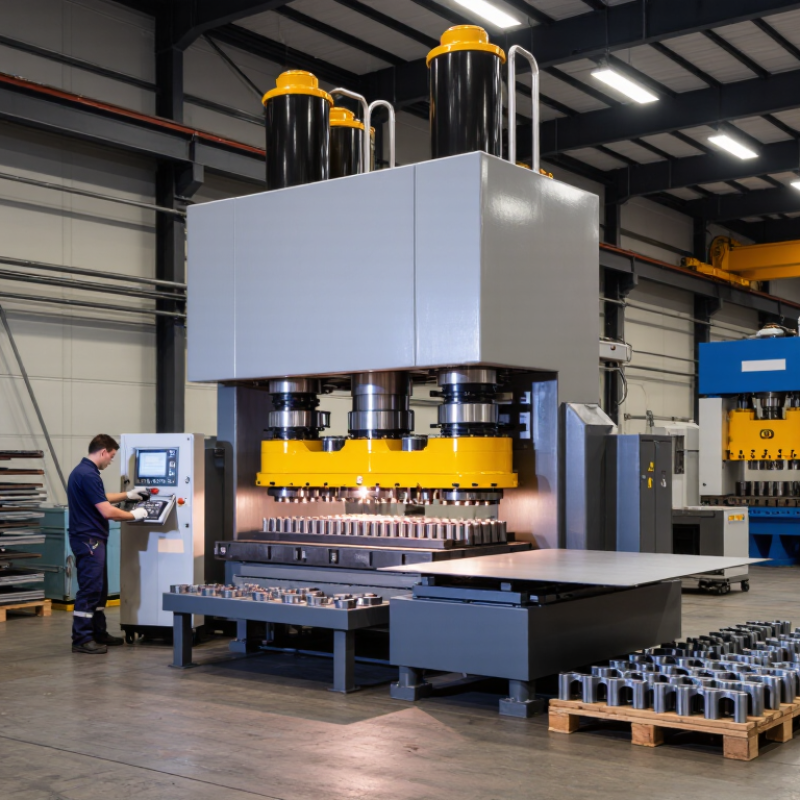
A metal forming machine is industrial equipment that changes metal into a specific shape without removing most of its material. It uses controlled force, heat, or both. Common examples include press brakes, rolling machines, stamping presses, and tube benders. Each machine applies pressure through tools, dies, rollers, or molds.

The process may begin with a flat sheet, a bar, a tube, or a heated billet. A press brake bends sheet metal along a measured line. Rollers gradually curve a plate into a cylinder. A stamping machine can create holes, ribs, or detailed profiles in seconds. The machine’s capacity depends on material thickness, metal strength, tool design, and required accuracy. Small errors matter.

In practical workshops, operators check alignment, clamping, lubrication, and tool wear before production. Digital controls can improve repeatability, but they cannot correct poor measurements or damaged tooling. That is easy to forget. The operator still matters. Safe guarding and suitable protective equipment reduce exposure to pinch points, sharp edges, and unexpected movement. Regular inspections also help prevent uneven bends, surface marks, and premature machine failure. Choosing a forming machine means matching its force, working range, control system, and maintenance needs to the actual job, not an imagined one.

How Metal Forming Machines Shape and Process Materials

Why Choose a Metal Forming Machine?

Metal forming machines shape and process sheet, plate, wire, and profiles through controlled force. Their methods include bending, rolling, stamping, drawing, and forging. Unlike cutting, forming keeps most material in the final part. This can reduce scrap when tooling and lubrication match the material. The World Steel Association reported 1.88 billion tonnes of crude steel production in 2023. Even a small yield improvement matters at that scale.

A press drives a die into a blank, while force, speed, and clearance control the result. Roll forming applies repeated bends, creating long profiles with consistent cross-sections. Forging compresses metal, refining its geometry and sometimes its grain flow.

The International Energy Agency states that industry uses about 37% of global final energy demand. Efficient forming therefore deserves attention, although machine energy is only part of the footprint.

Operators still inspect springback, edge cracking, and dimensional drift. Software predicts much, but not everything.

Tips:

Measure material thickness at several points before setup. Record die wear, lubrication condition, and press force after each run. Use a pilot sample and inspect bends, holes, and surface marks. Do not chase maximum speed first. A slower stroke can protect tooling and reveal unstable settings. One weakness remains: published efficiency figures often assume ideal conditions. Actual results change with coil variability, operator skill, and maintenance intervals. That gap deserves honest measurement.

Which Industries Use Metal Forming Machines?

Metal forming machines support industries that need repeatable shapes, controlled strength, and efficient production. Automotive factories form brackets, panels, chassis parts, and safety components. Construction suppliers produce beams, roofing sections, pipes, and structural connectors. Appliance manufacturers shape doors, housings, and internal supports from steel or aluminum. Each sector demands different force, tooling, speed, and dimensional accuracy.

Aerospace companies use forming equipment for lightweight panels and carefully shaped structural parts. Energy manufacturers form components for turbines, storage systems, and electrical enclosures. Medical equipment producers also depend on clean, precise forming for trays, frames, and instrument housings. In practice, material thickness and springback can change the result. A machine that performs well on one production line may disappoint on another. The right choice requires trial runs, inspection data, and realistic maintenance planning.

Tips: Check the material grade, thickness range, required bend radius, and expected production volume. Ask for sample forming tests before purchasing equipment. Review operator training, tooling changes, safety controls, and service access. Do not judge a machine by speed alone. Stable accuracy may matter more than a faster cycle. Allow room for improvement; even experienced teams sometimes underestimate setup time.

Why Choose a Metal Forming Machine? - Which Industries Use Metal Forming Machines?
Industry Common Metal Forming Machines Typical Materials Representative Components Primary Reasons for Choosing Metal Forming Key Production Requirements
Automotive Hydraulic presses, mechanical presses, stamping lines, tube benders and roll forming machines Low-carbon steel, high-strength steel, stainless steel, aluminum alloys
  • Body panels and structural reinforcements
  • Brackets, cross-members and seat components
  • Exhaust tubes and formed chassis parts
High repeatability, fast cycle times, efficient material use and the ability to produce complex shapes at high volume Tight dimensional tolerances, consistent surface quality, automated feeding and reliable process control
Aerospace Hydraulic forming presses, stretch forming machines, press brakes and tube forming equipment Aluminum alloys, titanium alloys, nickel-based alloys, stainless steel
  • Aircraft skin panels
  • Ribs, frames and fairings
  • Lightweight ducts and formed tubing
Produces lightweight parts with controlled contours while reducing assembly joints and preserving material strength Strict traceability, accurate springback control, low distortion and documented process repeatability
Construction and Structural Engineering Roll forming machines, press brakes, hydraulic presses and plate bending machines Carbon steel, galvanized steel, stainless steel, aluminum
  • Roofing and wall profiles
  • Studs, tracks and structural channels
  • Steel beams, brackets and connection plates
Efficient production of long, uniform profiles with strong load-bearing performance and reduced fabrication waste Profile consistency, controlled bend angles, durable tooling and compatibility with long sheet or coil stock
Appliances Stamping presses, deep-drawing presses, press brakes and roll forming machines Cold-rolled steel, stainless steel, aluminum, coated sheet metal
  • Washing machine cabinets
  • Refrigerator liners and panels
  • Oven bodies, shelves and internal supports
Supports high-volume production, smooth finishes, repeatable dimensions and integrated features such as ribs and mounting holes Good surface protection, controlled drawing depth, low scrap rates and compatibility with decorative finishes
Electrical and Electronics Precision stamping presses, turret punches, press brakes and small-part forming machines Copper, brass, aluminum, stainless steel, galvanized steel
  • Electrical enclosures and cabinets
  • Busbars, terminals and contact components
  • Mounting brackets and shielding parts
Enables precise, repeatable production of thin-gauge parts and conductive components with minimal secondary machining Fine tolerances, burr control, accurate hole placement and protection against deformation during handling
Energy and Power Generation Plate rolling machines, hydraulic presses, press brakes, tube benders and profile forming machines Carbon steel, stainless steel, duplex stainless steel, nickel alloys, aluminum
  • Pressure vessel sections
  • Pipe supports and cable trays
  • Heat exchanger components and equipment housings
Forms thick and corrosion-resistant materials into durable components while supporting efficient fabrication of large structures High forming force, controlled radii, weld preparation accuracy and compliance with applicable safety standards
Rail Transportation Large hydraulic presses, press brakes, roll forming machines and plate bending equipment Carbon steel, stainless steel, aluminum alloys, weathering steel
  • Carbody panels and underframes
  • Roof sections and interior support profiles
  • Brackets, steps and structural members
Creates strong, lightweight and repeatable structural parts suitable for long vehicle bodies and modular assembly Large working capacity, dimensional stability, controlled residual stress and consistent weld fit-up
HVAC and Refrigeration Roll forming machines, press brakes, duct forming machines and tube benders Galvanized steel, stainless steel, aluminum, copper
  • Air ducts and reinforcement profiles
  • Heat exchanger tubes and headers
  • Equipment panels and mounting frames
Improves profile uniformity, reduces manual fabrication and supports efficient production of leak-resistant assemblies Accurate dimensions, clean edges, repeatable seams and compatibility with thin-gauge materials
Furniture and Interior Systems Tube bending machines, roll forming machines, press brakes and stamping presses Mild steel, stainless steel, aluminum
  • Furniture frames and legs
  • Drawer slides and support rails
  • Partitions, shelving systems and fittings
Delivers consistent shapes, attractive finishes and economical production for both standard and customized designs Repeatable bend geometry, low marking, smooth edges and flexible tooling for different product sizes
Agricultural and Construction Equipment Heavy-duty hydraulic presses, plate rolling machines, press brakes and tube forming machines Carbon steel, high-strength steel, abrasion-resistant steel, aluminum
  • Equipment frames and guards
  • Hoppers, buckets and tool mounts
  • Hydraulic tubes and protective structures
Provides strong formed parts with fewer welds, improved structural integrity and efficient processing of thick materials High tonnage, durable tooling, controlled deformation and the ability to process heavy plate and tubular sections
Medical Equipment Precision press brakes, stamping presses, deep-drawing presses and tube bending machines Stainless steel, aluminum, titanium, low-carbon steel
  • Instrument trays and cabinets
  • Hospital bed components
  • Equipment frames and protective covers
Supports hygienic designs, consistent dimensions and smooth surfaces that are suitable for cleaning and sterilization Low surface damage, accurate forming, cleanable geometries and controlled burrs on finished parts
General Metal Fabrication Press brakes, shearing and stamping systems, tube benders, plate rollers and roll forming machines Carbon steel, stainless steel, aluminum, copper and galvanized sheet
  • Machine guards and frames
  • Storage racks and cabinets
  • Custom brackets, channels and enclosures
Offers production flexibility, repeatable results, reduced manual labor and lower dependence on machining for formed geometries Quick tooling changes, programmable controls, suitable force capacity and efficient handling of different batch sizes
Metal forming machines shape sheet, plate, tube or profiles through controlled force, usually without removing material. The most suitable machine depends on the material, thickness, geometry, production volume and required accuracy.

What Benefits Do Metal Forming Machines Offer?

Metal forming machines offer controlled, repeatable production for workshops and industrial teams. They shape sheet, tube, and other metal sections with measured force. This control helps reduce uneven bends, surface damage, and material waste. A skilled operator can also adjust pressure, tooling, and speed for different materials. Small changes matter.

Production speed is another practical benefit. Once settings are verified, the machine can produce consistent parts with less manual handling. This improves workflow and makes quality checks easier. Digital controls may record forming parameters, supporting traceability and process improvement. In my experience, repeatability often saves more time than raw operating speed. However, setup still requires attention. Incorrect tooling can cause distortion or premature wear.

Modern machines can also improve workplace safety by reducing heavy manual effort. Guards, sensors, and controlled movement help limit avoidable risks when properly maintained. Regular inspections remain essential, especially around hydraulic systems, electrical components, and tooling surfaces. These machines are not effortless solutions. Operators need training, material knowledge, and patience during the first trials. A useful benefit is flexibility: one machine may support prototypes, repair work, and medium-volume production. Yet complex shapes may need additional tooling, careful testing, or a different forming method. Balancing capability, maintenance needs, energy use, and operator skill is necessary before purchase.

How to Choose the Right Metal Forming Machine

Why Choose a Metal Forming Machine?

How to Choose the Right Metal Forming Machine

Choosing a metal forming machine starts with the material, not the catalog. Identify the metal type, thickness, width, and required bend or shape. Steel, aluminum, and copper behave differently under pressure. A mismatch can cause cracks, distortion, or expensive rework. Measure the largest part you expect to produce. Leave room for future projects.

In practical shop evaluations, I compare forming force, working length, speed, accuracy, and tooling flexibility. The machine must handle your normal workload without constant strain. Check whether its controls support repeatable settings and clear error feedback. Ask for a sample forming test using your actual material. Numbers alone can mislead. I once underestimated setup time, and the production schedule suffered.

Operator skill also matters. A highly automated machine may reduce errors, but it can demand specialized training. Review guarding, emergency controls, maintenance access, and documented service procedures. Inspect the frame, drive system, and tool alignment carefully. Reliable records are useful when comparing long-term operating costs. Consider energy use, spare parts availability, and planned maintenance intervals. A cheaper purchase may become costly through downtime. Leave some judgment for real workshop conditions.